
Side Dishes
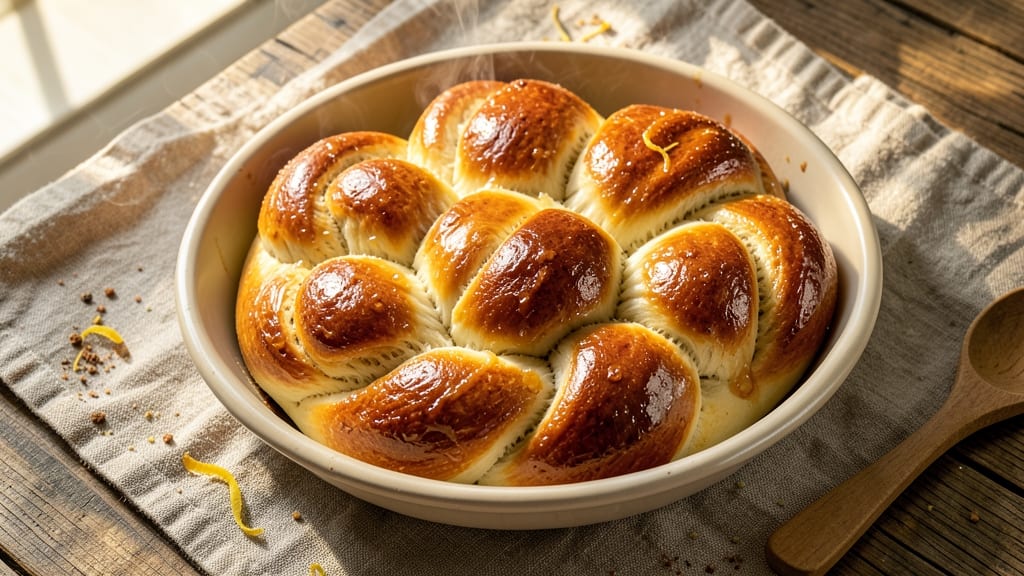
This authentic Jewish challah bread recipe brings the rich traditions of Shabbat to your kitchen with its signature braided shape and golden egg wash.
The secret lies in a generous amount of eggs—at least four—for that signature tender crumb and glossy finish, while honey-infused dough creates the perfect balance of sweetness and texture.
What makes this recipe truly special is the attention to detail in every step, from proper kneading to the precise braiding technique that transforms simple dough into a centerpiece for your table.
The dough requires patience, with multiple resting periods to develop gluten and flavor, but the result is worth every minute. After shaping the loaf into its iconic three-strand braid, the egg wash not only adds shine but also gives that signature golden hue.
This recipe stays true to tradition while offering flexibility—top with poppy seeds, sesame, or leave it plain for a classic presentation. The aroma alone as it bakes will transport you to a Friday night dinner, where challah takes center stage.
Perfect for Shabbat celebrations, holiday gatherings, or simply treating yourself to homemade bread, this recipe delivers restaurant-quality results with a touch of tradition. The dough's elasticity and the braided design create a beautiful, satisfying loaf that's crisp on the outside and soft in the middle.
With just a few simple ingredients and careful technique, you'll have a loaf that rivals what you'd find in a Jewish bakery.
Whether you're a seasoned baker or new to challah-making, this recipe includes all the tips and tricks to ensure success. From proper proofing times to shaping techniques, every detail is covered so you can achieve that perfect loaf.
The result is a bread that's not just delicious but also carries the weight of tradition in every bite.
Ingredients for authentic jewish challah bread
Four eggs, honeyed dough, and a braided touch—all you need for restaurant-style challah.
| Ingredient | Amount | Notes |
|---|---|---|
| All-Purpose Flour 🌾 | 5 cups | Spooned and leveled, not packed |
| Large Eggs 🥚 | 4 whole | Room temperature for best rise |
| Granulated Sugar 🍚 | ¼ cup | For subtle sweetness |
| Active Dry Yeast 🍞 | 2 ¼ tsp | Fresh yeast preferred |
| Warm Water 💧 | 1 ¼ cups | 110°F for yeast activation |
| Unsalted Butter 🧈 | ½ cup | Cold, cubed for easier mixing |
| Honey 🍯 | ¼ cup | Light variety for mild flavor |
| Salt 🧂 | 1 tsp | Kosher or sea salt |
| Poppy Seeds 🌻 | ¼ cup | Optional for traditional topping |
| Large Eggs 🥚 | 1 whole | For egg wash |
| Sesame Seeds 🌾 | ¼ cup | Optional for nutty flavor |
The eggs are non-negotiable here—room temperature is key for proper rise. Pasture-raised eggs from Trader Joe's or your local farm market add extra richness, but any large eggs work. The yeast needs to be fresh, so check the date on the package. If it's been sitting in your pantry for months, grab a new packet. Honey should be light and smooth—Manuka or clover both work beautifully. For the butter, Land O'Lakes or Plugrá are reliable, but any unsalted butter will do. The flour? King Arthur or Gold Medal are my go-tos—they give that perfect tender crumb.
No honey? Maple syrup works in a pinch, but it'll add a deeper flavor. Short on eggs? Use three plus 1 tbsp of water—just know the texture might be slightly denser. The poppy seeds and sesame are optional, but if you're going for that classic look, buy them whole and toast them lightly in a dry pan for extra flavor. The butter can be substituted with vegetable shortening if you're avoiding dairy, though it won't have the same richness. And if you're out of kosher salt, fine sea salt at half the amount will work just fine.
This dough needs time to shine—let it rest at least 2 hours between kneading and braiding. Store any unused dough in an airtight container in the fridge for up to 3 days, or freeze it for 3 months. The baked loaf keeps well wrapped at room temperature for 2 days, or you can freeze slices for quick toast. Pro tip: Wrap cooled loaves in beeswax wrap to keep them fresh longer. And if you're making multiple loaves, use a stand mixer with the dough hook—it saves your arms and ensures even kneading.
Why You'll Love This Recipe
- No-Knead Magic: I’ll admit, I was skeptical about skipping the kneading—until I tried this. The yeast and warm water do all the work while I sip coffee, and the dough rises just enough for that perfect, pillowy texture without a single ache in my arms.
- Sweet & Golden Crust: That touch of sugar in the dough caramelizes into a glossy, slightly crisp shell, while the eggs keep the inside tender. Honestly? It’s the kind of bread that makes you pause mid-bite and think, "How is this real?"—and then you crave another slice.
- Shabbat Ready: Between us, nothing says "I’ve got this" like pulling out warm, braided challah for Friday night. It’s the centerpiece that elevates even the simplest meal—no fancy sides needed. (My kids still fight over the last piece, even after three helpings.)
- Budget-Friendly Staple: Five ingredients, one bowl, zero waste. That flour and a few eggs stretch into three loaves, and the leftovers? Toasted with butter? Heaven. Freeze the extras—because let’s be real, you’ll want to make this again before the first loaf goes cold.
Step-by-step instructions for authentic Jewish challah bread
Here's how to craft a traditional egg-rich loaf with honeyed sweetness and perfect braided texture.
Activate the Yeast for Maximum Rise
In a small bowl, combine the 1.25 cups warm water (about 110°F) with the 0.25 cup granulated sugar and 2.25 teaspoons active dry yeast. Stir gently and let sit for 5-10 minutes until frothy. You'll see tiny bubbles forming—this confirms your yeast is alive and ready to work. If it doesn't bubble, your yeast might be old or the water too hot. I always test mine first to avoid flat bread.
While waiting, whisk together the 4 whole large eggs in a separate bowl. Room-temperature eggs incorporate better into the dough, so take them out of the fridge 20 minutes before starting. The eggs will add richness and structure to your challah, making it tender yet sturdy enough for braiding.
Mix the Dough for Perfect Texture
In the bowl of a stand mixer fitted with the dough hook, combine the 5 cups all-purpose flour and 1 teaspoon salt. Mix on low speed to distribute evenly. Add the cold 0.5 cup unsalted butter, cut into cubes, and mix until fully incorporated. The butter should create small pea-sized pieces throughout—this will give your challah its signature tender crumb.
With the mixer running on low, gradually pour in the yeast mixture and whisked eggs. Mix for 3-4 minutes until the dough comes together into a shaggy mass. It'll be sticky but shouldn't stick to your fingers. If it's too dry, add 1 tablespoon warm water; if too wet, add 1 tablespoon flour. The ideal dough should be soft but pliable, not sticky enough to leave residue on your hands.
Knead Until Silky and Elastic
Switch your mixer to medium speed and knead the dough for 8-10 minutes until smooth and elastic. You'll know it's ready when it forms a windowpane—press your fingers into the dough and gently pull apart. If it stretches without tearing, you've achieved the perfect gluten development. This step is crucial for that authentic Jewish challah texture that's both tender and slightly chewy.
Transfer the dough to a lightly greased bowl, cover with a damp towel, and let rise in a warm place for 1-1.5 hours or until doubled in size. I place my bowl in the oven with a cup of hot water to create a warm, humid environment. The dough should feel light and springy when pressed gently. Patience here ensures a high, fluffy loaf with proper structure for braiding.
Shape the Classic Braided Loaf
Punch down the risen dough and divide it into 3 equal pieces on a lightly floured surface. Roll each piece into a 24-inch rope, about 1 inch thick. Here's where tradition meets technique: lay one rope on your work surface, then place the second rope diagonally across it, overlapping by about 6 inches. Tuck the ends under and braid tightly, keeping the tension even throughout. The third rope should form the final strand of your braid.
Shape the braid into an oval on a parchment-lined baking sheet, tucking the ends under the loaf. Cover loosely with a towel and let rise for another 30-45 minutes until puffy. The braid should look tight and well-defined. For extra shine and flavor, brush the top with the 1 whole large egg beaten with 0.25 cup honey and sprinkle with 0.25 cup poppy seeds and 0.25 cup sesame seeds. This egg wash gives that beautiful golden crust while the seeds add traditional texture and nutty flavor.
Bake to Golden Perfection
Preheat your oven to 375°F. Bake the challah for 30-35 minutes until golden brown and internal temperature reaches 190°F. The top should have a deep golden hue with some areas almost caramelized. For best results, rotate the pan halfway through baking to ensure even browning. The bread should sound hollow when tapped on the bottom—this indicates it's fully baked.
Let the challah cool on a wire rack for at least 30 minutes before slicing. This resting period allows the crumb to set properly. Serve warm with butter or jam, or save it for Shabbat—this is where the magic happens. The combination of the egg-rich dough, honeyed sweetness, and traditional braid makes every bite feel like a taste of home. The sesame and poppy seeds add delightful crunch and visual appeal that's pure Jewish bakery tradition.
Pro Tips For Making Authentic Jewish Challah Bread
- Dissolve Yeast First: Use just ¼ cup of the warm water to mix the yeast and sugar—let it sit until it’s bubbly (about 5-10 minutes). I learned this the hard way: skipping this step means your dough might not rise properly, and you’ll end up with dense, flavorless bread. (Yes, even if you’re impatient like me.)
- Knead Until Silky: This dough needs a good 10-12 minutes of kneading by hand—until it’s smooth, elastic, and springs back when poked. I used to rush it, and the bread would turn out gummy. Think of it like working dough into a satin sheet, not just punching it down.
- Shape Loops, Not Braids: For authentic challah, focus on three long, even loops rather than tight braids. Tuck the ends under gently to seal—this keeps the shape intact while baking. My first attempts looked like tangled noodles, but once I got the loops right, the bread held its form beautifully.
- Egg Wash Matters: Beat the eggs with a splash of water (about 1 tablespoon) before brushing on the dough. This gives a richer, shinier crust that browns evenly. I skipped it once and ended up with dry, pale challah—don’t make that mistake.
Make-ahead tips for this dish
Dough Prep Ahead
Make the dough the night before for deeper flavor development. After the first rise, shape it into a ball, wrap tightly in plastic wrap, and refrigerate overnight. The cold slows fermentation, creating a more complex taste.
When ready to braid, let it sit at room temperature for 1-2 hours to soften before shaping. This method works perfectly for Shabbat prep—just wake up to a ready-to-braid dough! 🌙
Proofing Shortcuts
Skip the warm oven trick by using a proofing box or even a microwave with a cup of hot water (set to low). For a no-fuss approach, place your dough bowl in a turned-off oven with the light on—the light bulb provides gentle warmth.
If you're short on time, pop the shaped loaf in a 350°F oven for 10 minutes to speed up the final proof. 💡
Freezing Unbaked Dough
Freeze shaped but unproofed dough on a floured tray for 1 hour to solidify, then transfer to a ziplock bag for up to 3 months. Thaw overnight in the fridge, then let sit at room temperature for 30 minutes before proofing.
For baked loaves, freeze fully cooled challah wrapped in foil for 2 months. Reheat slices in a 350°F oven for 5-10 minutes to restore freshness. 🧊
Make-Ahead Baking
Bake your challah 2 days ahead and store in an airtight container at room temperature. For longer storage, freeze sliced loaves in beeswax wrap—they thaw perfectly for toast.
Reheat slices in a toaster or skillet for that bakery-fresh crunch. I love making a double batch on Sunday for Shabbat meals all week—no last-minute baking stress! ⏰
Seed Topping Prep
Toast your poppy and sesame seeds in a dry skillet over medium heat for 2-3 minutes until fragrant, then cool completely before using. Store in a small jar in your pantry for up to 2 weeks.
For extra flavor, mix with 1 tsp cinnamon before sprinkling. This prep step adds that professional bakery touch with minimal effort. 🌾
Egg Wash Variations
For a richer finish, mix the egg wash with 1 tsp milk or cream instead of water. For a vegan option, use 1 tbsp aquafaba (chickpea brine) + 1 tsp cornstarch.
Store unused egg wash in the fridge for up to 3 days—perfect for last-minute baking. The key is to brush it on just before baking for maximum shine. 🥚
Nutrition facts
Frequently asked questions
Why does traditional Jewish challah use so many eggs?
The generous amount of eggs—typically 4 to 5—creates that signature tender, slightly chewy texture while giving the bread its iconic golden shine. Eggs also help bind the dough's high moisture content, making it sturdy enough for braiding. Historically, eggs symbolize abundance and were used in Shabbat breads to honor the day of rest.
Can I make challah without honey? What's the best substitute?
Yes! Honey adds subtle sweetness, but you can substitute with maple syrup or agave nectar (use the same amount). For a neutral flavor, omit it entirely—just reduce the sugar slightly to balance the dough. If you're avoiding sugar, try date syrup (1:1 ratio) for a caramel-like depth.
How do I fix a collapsed braid during baking?
Collapse happens when the dough isn't properly proofed or braided too loosely. For next time:
- Ensure the dough doubles in size before shaping,
- Braid tightly with even tension, and
- Place the loaf on a parchment-lined tray to prevent sticking. If it happens, try baking at 350°F for 10 minutes before increasing to 375°F to help it rise.
What's the difference between a 3-strand and 6-strand braid?
A 3-strand braid is classic for Shabbat, symbolizing the three patriarchs of Judaism (Abraham, Isaac, and Jacob). A 6-strand braid represents the six days of creation. For beginners, start with 3 strands—they're easier to shape evenly. Divide the dough into 6 equal pieces for a 6-strand version, braiding three pairs together.
Can I use whole wheat flour in this recipe?
Yes, but replace up to 25% of the all-purpose flour with whole wheat for a nuttier flavor and denser texture. Use King Arthur Whole Wheat Flour for best results—it blends better. Expect a slightly shorter rise time and adjust the water by 1-2 tablespoons if the dough feels dry. For a lighter texture, add 1 teaspoon vital wheat gluten per cup of whole wheat flour.