
Side Dishes
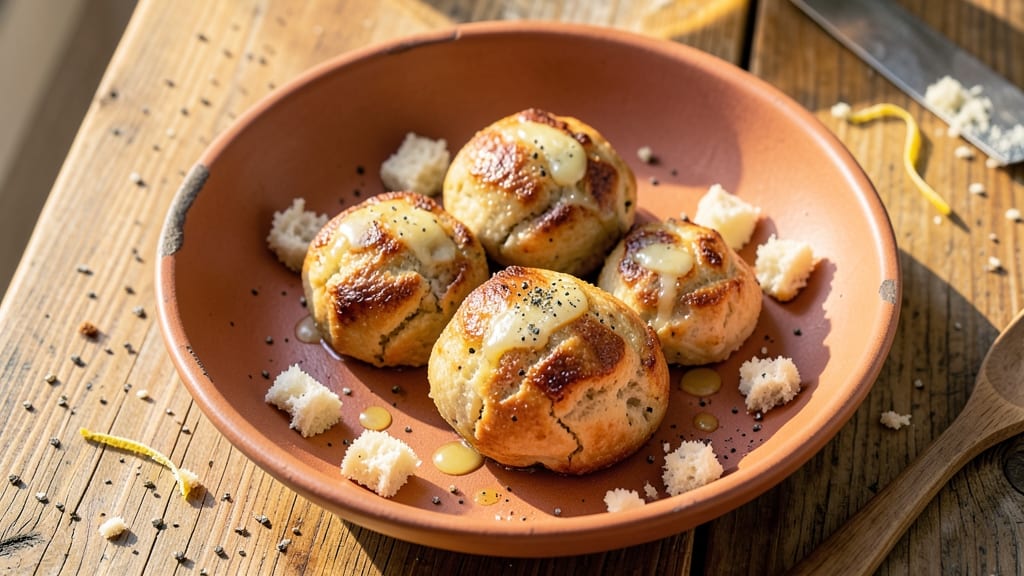
Austrian bread dumplings bring hearty comfort to any table with their signature pillowy softness and foolproof foil-sealed technique. These Semmelknödel transform stale bread into tender, melt-in-your-mouth bites that absorb flavors beautifully.
The secret lies in the perfect balance of milk-soaked bread, egg-rich dough, and gentle boiling—no special skills required, just patience and a few simple ingredients.
What sets these dumplings apart is the foil-sealed cooking method, which locks in moisture and creates that signature juicy center. Traditional Austrian cuisine pairs them perfectly with rich goulash or clear broths, but they're equally at home as a side for roasted meats.
The dough comes together in minutes, and the shaping process is surprisingly intuitive once you get the hang of it.
By the time they emerge from the pot, you'll have dumplings that are light as clouds yet substantial enough to stand up to hearty main dishes. The foil-sealing technique ensures they stay tender and juicy, never dry or gummy.
This is comfort food at its finest—simple enough for weeknight dinners but impressive enough for company.
Serve them with crispy fried onions on top or drizzled with classic Austrian cheese sauce for the full experience. The beauty of this recipe is its versatility—make a big batch ahead and reheat as needed. Let's get started on creating these beloved Austrian classics.
Ingredients for austrian bread dumplings
Transform simple ingredients into cloud-like Austrian bread dumplings with this foolproof foil-sealed technique.
| Ingredient | Amount | Notes |
|---|---|---|
| Stale White Bread 🍞 | 3 cups | Day-old or lightly toasted for texture |
| Whole Milk 🥛 | 1 ½ cups | Full-fat for richness |
| Large Eggs 🥚 | 3 whole | Room temperature for even binding |
| Unsalted Butter 🧈 | ¼ cup | Cold, cubed for easier handling |
| Diamond Crystal Kosher Salt 🧂 | ½ tsp | Adjust to taste |
| Freshly Ground Black Pepper 🌶️ | ¼ tsp | For subtle seasoning |
| Fresh Nutmeg 🌿 | ¼ tsp | Finely grated for warmth |
| Vegetable Oil 🫒 | 2 tbsp | For greasing foil |
| Aluminum Foil 📄 | 1 sheet | Heavy-duty for sealing |
| Yellow Onion 🧅 | 1 whole | Thinly sliced for topping |
| Water 💧 | 4 cups | For boiling dumplings |
| All-Purpose Flour 🌾 | ½ cup | For dusting work surface |
The bread forms the foundation, so choose day-old white bread—stale but not dry. Bread from a bakery works best, but avoid pre-sliced loaves with preservatives. For the milk, whole milk is non-negotiable—it creates that signature tender crumb. If you're using fresh bread, toast it lightly to remove excess moisture. The eggs should be room temperature for even binding, so take them out 15 minutes before mixing. Nutmeg is key here—freshly grated makes all the difference, but pre-ground works in a pinch.
No fresh nutmeg? Ground cinnamon at half the amount adds warmth, though it won't be identical. Running short on butter? Coconut oil works equally well for the dough, but it has a slight flavor. For the foil sealing, heavy-duty aluminum foil is essential—regular foil may tear. The onions can be swapped for shallots or leeks if you prefer, but yellow onions give that classic Austrian touch. If your bread is particularly fresh, microwave it for 10 seconds to remove excess moisture before soaking—this prevents gummy dumplings.
These dumplings reheat beautifully—steam for 5-7 minutes covered to restore their pillowy texture. Store leftovers in an airtight container for up to 3 days in the fridge, or freeze for up to 2 months by wrapping individually in foil. For make-ahead convenience, shape and freeze uncooked dumplings on a tray, then transfer to a bag. Boil from frozen, adding 2 extra minutes to the cooking time. The foil-sealed technique ensures they stay juicy even when reheated.
Why You'll Love This Recipe
- I use these for everything: a quick soup upgrade, a side for roasted chicken, or even breakfast with fried eggs. They’re my go-to when I’m too tired to plan, and somehow, they always feel special.
- Pantry Rescue: I swear by this recipe for turning yesterday’s bread into something magical. No waste, no fuss—just tear, soak, and boil. My kids don’t even notice it’s not fresh, and honestly? Neither do I.
- Buttery Soft Magic: That moment when you pull them from the broth—tender inside, just slightly firm on the edges—is pure joy. The butter and milk make them rich without being heavy, and the salt? Just enough to make them irresistible.
- Weeknight Workhorse: I use these for everything: a quick soup upgrade, a side for roasted chicken, or even breakfast with fried eggs. They’re my go-to when I’m too tired to plan, and somehow, they always feel special.
Step-by-step instructions for Austrian bread dumplings
Master the technique for tender, foil-sealed dumplings that stay moist and pillowy.
Prepare the Bread Mixture
Tear the 3 cups stale white bread into rough chunks and place them in a large mixing bowl. This texture helps create the perfect crumb structure. Add the 1.5 cups whole milk and let it soak for 5 minutes—this ensures the bread absorbs enough liquid without becoming soggy.
In a separate small bowl, whisk together the 3 whole large eggs, 0.5 tsp diamond crystal kosher salt, 0.25 tsp freshly ground black pepper, and 0.25 tsp fresh nutmeg. Pour this mixture over the soaked bread and gently fold until fully combined. The dough should hold together when pressed but still feel slightly crumbly—this is ideal for the final texture.
Shape and Seal the Dumplings
Lightly dust your work surface with 0.5 cup all-purpose flour to prevent sticking. Divide the dough into 6 equal portions (about 1/6 of the total mixture each). Roll each portion into a smooth ball, then flatten slightly into a 3-inch round. The thickness should be about 1/2 inch—too thin and they'll overcook; too thick and they won't steam properly.
Place each dumpling on a sheet of heavy-duty aluminum foil and lightly brush the top with 2 tbsp vegetable oil (divided). This creates a barrier that locks in moisture during boiling. Thinly slice the 1 whole yellow onion and place a few slices on top of each dumpling for flavor and aroma.
Boil to Pillowy Perfection
Bring 4 cups water to a rolling boil in a large pot. Carefully add the foil-wrapped dumplings and reduce heat to medium-low. The water should gently simmer—not boil vigorously—to prevent the dumplings from breaking apart. Cover the pot with a lid and cook for 15-18 minutes, until the dumplings float to the surface and the foil feels slightly resistant when pressed.
This foil-sealing method is key—it traps steam inside, creating that signature Austrian tenderness. If the water boils too hard, the dumplings may split; if it's too gentle, they won't cook through. Test doneness by gently lifting a dumpling with a slotted spoon—it should feel firm to the touch but still yield slightly.
Serve with Juicy Richness
Remove the dumplings from the pot and let them rest for 2 minutes before serving. The residual heat will finish cooking them while the foil keeps them from drying out. Unfold the foil carefully—you'll notice the dumplings have expanded slightly and developed a golden crust from the onion slices.
Serve immediately with a drizzle of melted unsalted butter (optional) and a sprinkle of freshly ground black pepper for contrast. These dumplings are best enjoyed warm, with their pillowy interior and lightly caramelized exterior. The foil-sealing technique ensures they stay moist even after sitting for a few minutes.
Pro Tips For Making Austrian Bread Dumplings
- Tear the Bread Like a Pro: Use your hands—no knives—rip the stale bread into rough, uneven chunks (think 1-2 inch pieces). I learned this the hard way: cubing too neatly traps steam and makes the dumplings dense. Messy tears create more surface area for the milk to soak in, giving you that light, pillowy texture.
- Soak the Bread Just Enough: Dump the bread into cold milk and let it sit for exactly 5 minutes, no more. After burning three batches with soggy, gluey dumplings, I realized soaking longer than this turns the milk into a paste. Drain well in a colander, pressing out excess liquid with your fingers—this keeps the dumplings from falling apart when boiling.
- Boil in Gentle Bubbles: Bring the water to a rolling boil first, then drop in the dumplings and immediately reduce to a low simmer. I used to keep them at full boil, and they’d turn gummy. A gentle simmer (tiny bubbles breaking the surface) cooks them evenly without breaking them apart—aim for 12-15 minutes until they float and look opaque.
- Butter Them While Hot: Toss the cooked dumplings in melted butter right out of the pot—they’ll absorb it like sponges. Skip this, and you’re left with dry, flavorless lumps. For extra richness, mix in a splash of the milk you drained earlier (about 2 tablespoons) with the butter. Yes, it’s a little extra work, but it makes all the difference when serving.
Pro cooking tips for austrian bread dumplings
Foil-Sealing Mastery
The foil-sealing technique is what transforms good dumplings into restaurant-quality ones. Start by using heavy-duty aluminum foil—regular foil tears when wet. Brush each dumpling with vegetable oil before sealing to create a moisture barrier.
This prevents the bread from absorbing too much water during boiling, keeping the interior tender. I like to press the edges firmly to eliminate air pockets—this ensures even cooking and that signature juicy center. 💫
Dough Consistency Secrets
The dough should feel slightly crumbly but hold together when pressed—this is the sweet spot for texture. If it's too wet, add 1-2 tablespoons all-purpose flour; if too dry, mix in 1 teaspoon milk.
The eggs are crucial here: room-temperature eggs bind better than cold ones. I always use large eggs for the right balance of richness and structure. Overmixing makes the dumplings tough, so fold just until combined. 🥚
Boiling Temperature Control
This is where most home cooks go wrong—boiling too vigorously causes dumplings to split. Maintain a gentle simmer at medium-low heat after adding the foil-wrapped dumplings. The water should barely ripple, not roll.
I test doneness by lifting a dumpling with a slotted spoon—it should float and feel firm but still slightly yielding. If the water boils hard, the dumplings will break apart before they're fully cooked. 🌡️
Onion Topping Technique
Thinly sliced yellow onions on top of each dumpling add flavor and create a beautiful golden crust. For extra caramelization, I like to sprinkle a pinch of salt on the onions before sealing. This draws out moisture, helping them crisp slightly during boiling.
You can also add a tiny pat of butter to each foil packet before sealing—it melts slightly during cooking, infusing the dumplings with rich flavor. 🧅
Resting for Optimal Texture
Never skip the 2-minute rest after removing dumplings from the pot. This allows residual heat to finish cooking the center while the foil keeps moisture trapped inside. I often find that dumplings served immediately can feel slightly underdone in the middle.
The resting period also helps the bread absorb any remaining liquid, creating that perfect pillowy texture. For best results, serve within 10 minutes of resting. ⏱️
Make-Ahead Shortcuts
Shape the dumplings up to 24 hours ahead and store them wrapped in foil in the refrigerator. When ready to cook, simply add them to boiling water without thawing—they'll cook through just as perfectly.
For freezing, shape the dumplings, wrap each individually in foil, and store in a freezer bag for up to 2 months. Boil from frozen, adding 2 extra minutes to the cooking time. The foil-sealing method works beautifully for frozen dumplings too! ❄️
Nutrition facts
Frequently asked questions
Can I use fresh bread instead of stale bread for these dumplings?
Fresh bread works, but stale bread is ideal for texture. If using fresh, lightly toast it first to remove excess moisture, then microwave for 10 seconds to dry it out before soaking in milk. Too much moisture makes the dumplings gummy rather than pillowy.
What's the best way to reheat leftover Austrian bread dumplings?
Reheat in a steamer basket over simmering water for 5-7 minutes covered, or wrap them in foil and bake at 350°F for 10 minutes. The foil-sealing method keeps them juicy—never microwave uncovered, as they'll dry out. For best results, reheat only what you plan to serve.
Can I make these dumplings without foil? What's the alternative?
Without foil, use parchment paper or a cheesecloth pouch instead. Wrap each dumpling in cheesecloth, tie with string, and boil for 12-15 minutes—it traps moisture but requires more careful handling. The foil method creates that signature Austrian tenderness by locking in steam perfectly.
Why did my dumplings turn out dense instead of pillowy?
Overmixing the dough or using too much flour makes them dense. The dough should feel slightly crumbly but hold together—if it's too wet, add 1 tbsp flour; if too dry, mix in 1 tsp milk. Also ensure you're using whole milk and room-temperature eggs for proper binding.
What are the best toppings or sauces to serve with these dumplings?
Classic pairings include crispy fried onions, melted Austrian cheese sauce (made with Gruyère and Emmental), or a rich goulash gravy. For a lighter option, drizzle with melted butter and fresh parsley. The foil-sealed method makes them versatile—serve with meat dishes or as a standalone side.