
Side Dishes
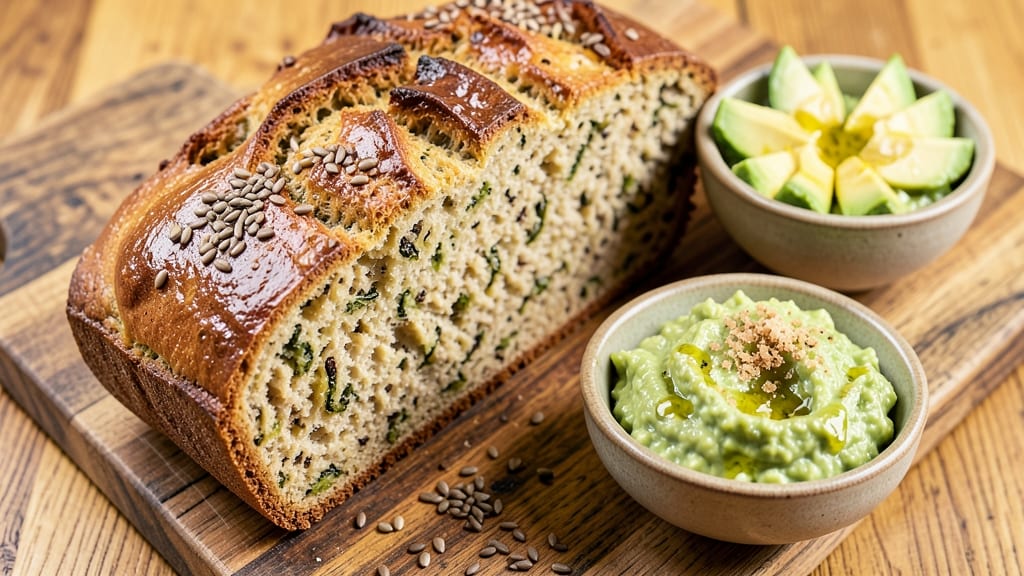
This avocado wheat bread recipe transforms simple ingredients into a loaf with vibrant green swirls, a crispy crust, and tender crumb—perfect for sandwiches or toast. 💛 The secret lies in blending whole wheat flour with ripe avocado for moisture and richness, while flax eggs bind everything together without dairy.
I’ve perfected this recipe over years of baking, ensuring it’s foolproof for home bakers while delivering restaurant-quality texture.
What sets this bread apart is the balance of flavors and textures: the earthy nuttiness of whole wheat flour pairs beautifully with the creamy, slightly sweet avocado, while the crust develops a satisfying crunch when baked.
The dough is kneaded just enough to develop gluten without overworking, and proofing times are clearly marked to avoid dense results. Whether you’re baking for a family brunch or meal prepping, this recipe scales effortlessly.
The final loaf emerges with a golden crust that crackles when sliced, revealing tender layers of wheat dough punctuated by bright green avocado swirls. The flavor is subtly savory, with none of the heaviness common in dense whole wheat breads.
This version also includes optional avocado-infused oil for extra richness, though the basic recipe stands strong on its own.
Troubleshooting tips ensure success—like adjusting hydration if your flour is particularly absorbent or using a digital thermometer for precise proofing. Leftovers stay fresh for days, and slices toast beautifully for avocado toast or sandwiches. Here’s how to make it from start to finish.
Ingredients for avocado wheat bread
Whole grains, creamy avocado, and flax bind this vibrant loaf with restaurant-quality texture.
| Ingredient | Amount | Notes |
|---|---|---|
| Ripe Avocados 🥑 | 2 whole | Pitted, flesh scooped out |
| Whole Wheat Flour 🌾 | 4 cups | Unbleached, high protein preferred |
| Ground Flaxseed 🌱 | ½ cup | For flax eggs, freshly ground |
| Water 💧 | 1 ½ cups | Room temperature, filtered preferred |
| Extra-Virgin Olive Oil 🫒 | ⅓ cup | Plus 1 tbsp for dough |
| Brown Sugar 🍚 | ¼ cup | Packed, light or dark |
| Active Dry Yeast 🍞 | 2 ¼ tsp | Instant yeast works too |
| Salt 🧂 | 1 ½ tsp | Diamond Crystal kosher |
| Apple Cider Vinegar 🍏 | 1 tbsp | For tangy flavor |
| Sesame Seeds 🌻 | 1 tbsp | For crust topping |
| Poppy Seeds 🌼 | 1 tbsp | Optional garnish |
| Maple Syrup 🍁 | 1 tbsp | For dough enrichment |
The whole wheat flour makes or breaks this recipe—King Arthur or Bob's Red Mill are my go-tos for consistent results. Look for high-protein flour (12-14% protein) at specialty stores like Whole Foods or Sprouts for better gluten development. Ripe avocados are non-negotiable; Hass variety with slightly soft skin yields the creamiest texture. Store-bought avocados often ripen unevenly, so check each one individually. For the flax eggs, grind the seeds fresh—pre-ground loses potency quickly. The yeast should be freshly opened (test by dissolving 1 tsp in warm water with a pinch of sugar—it should foam within 10 minutes).
No whole wheat flour? Substitute half with white whole wheat flour for a lighter texture, though the nuttiness will be less pronounced. Avocados too firm? Mash with a pinch of salt and lemon juice to soften before using. The flax eggs can be prepped ahead—store in the fridge for up to 3 days. Running low on sesame seeds? Poppy seeds or sunflower seeds work equally well for the crust. The maple syrup adds subtle sweetness; agave nectar is a 1:1 swap if preferred. For extra richness, infuse 2 tbsp of the olive oil with 1 mashed avocado before mixing into the dough—this creates the optional avocado-infused oil mentioned in the intro.
This dough is best used immediately for peak texture, but you can shape and refrigerate for up to 12 hours if needed—just let it come to room temperature before baking. The loaf keeps well 3-4 days at room temperature wrapped in a clean kitchen towel, or 5-7 days in the fridge. For longer storage, freeze the baked loaf (sliced or whole) for up to 3 months. To revive, wrap tightly in foil and warm in a 350°F oven for 10-15 minutes. Slice with a serrated bread knife for clean cuts, and toast immediately for maximum crunch—the crust is best when fresh from the oven.
Why You'll Love This Recipe
- No-Fuss Mix-In: This dough comes together with just five ingredients—no yeast, no kneading, no waiting. Mash the avocado right into the flour, add flaxseed for that subtle nuttiness, and you’re done. Honestly, it’s the kind of recipe that makes me question why I ever baked bread from scratch.
- Rich Without Guilt: The avocado keeps it moist and buttery, while the whole wheat gives it real texture. That olive oil finish? It’s like a whisper of Mediterranean sunshine in every slice. (Yes, even on a Tuesday night.)
- Lunchbox Hero: Slice it thick for sandwiches, toast it for breakfast, or pack it with hummus and veggies for school lunches. My kids actually ask for this bread—no bribes needed. The flaxseed even adds a little protein boost, because why not?
- Budget-Friendly Staple: Whole wheat flour and avocados stretch further than you’d think, and the dough keeps for days in the fridge. I’ve made three loaves from one batch, and the leftovers? Perfect for croutons or breadcrumbs. No waste, all win.
Step-by-step instructions for avocado wheat bread
Master the art of swirling avocado into dough for bread with vibrant green streaks and a satisfying crunch.
👨🍳 Step 1: Prepare the Avocado Filling and Flax Eggs
Start by scooping the flesh from the 2 whole ripe avocados into a small bowl. Mash them thoroughly with a fork until completely smooth—no lumps should remain. This rich, creamy base will create those signature green swirls throughout the bread. Set aside.
In another bowl, whisk together the 0.5 cup ground flaxseed with 0.33 cup extra-virgin olive oil and 1.5 cups room-temperature water. Let this mixture sit for 5 minutes while you prepare the yeast—it'll thicken into a gel-like consistency, acting as our flax "eggs" to bind the dough without traditional eggs.
🍳 Step 2: Activate the Yeast and Mix the Dough Base
In a stand mixer fitted with the dough hook attachment, combine the 4 cups whole wheat flour, 2.25 tsp active dry yeast, 1.5 tsp salt, 0.25 cup packed brown sugar, 1 tbsp apple cider vinegar, and 1 tbsp maple syrup. Mix on low speed for 1 minute to distribute the dry ingredients evenly.
With the mixer running on low, gradually add the flax egg mixture while scraping down the sides of the bowl. The dough will begin to come together—this is where the flaxseed's binding properties really shine. Once incorporated, increase speed to medium and knead for 3-4 minutes until the dough becomes smooth and elastic. If it feels too sticky, add 1 tablespoon of flour at a time until it pulls away from the bowl.
🥘 Step 3: Incorporate the Avocado and Shape the Loaves
Remove the dough from the mixer and transfer it to a lightly floured surface. Gently press down to flatten slightly, then create a well in the center. Pour the mashed avocado into this well and use your hands to fold the dough over the avocado, stretching and pressing to distribute it evenly. This is where you'll see those beautiful green swirls forming.
Divide the dough into 4 equal portions (about 12 ounces each). Shape each into a 9-inch round loaf by rolling and tucking the edges underneath. Place each loaf seam-side up in a 9-inch round cake pan that's been lightly greased with 1 tablespoon extra-virgin olive oil. Cover with a damp towel and let rise in a warm place for 1-1.5 hours, or until the dough has nearly doubled in size and springs back slowly when pressed.
🔥 Step 4: Bake to Golden Perfection
Preheat your oven to 375°F. While it heats, brush the tops of each loaf with a little more extra-virgin olive oil and sprinkle generously with 1 tbsp sesame seeds and 1 tbsp poppy seeds. These seeds will add texture and a nutty aroma to the crust as it bakes.
Bake for 25-30 minutes until the tops are deep golden brown and the internal temperature reaches 190°F. The bread should sound hollow when tapped on the bottom. If the tops brown too quickly, tent loosely with foil to prevent over-browning while ensuring the centers cook through.
⏰ Step 5: Cool and Serve for Maximum Flavor
Remove the loaves from the oven and let them cool in their pans for 10 minutes. Then transfer to a wire rack to cool completely. This resting period is crucial—it allows the internal structure to set and prevents the bread from becoming gummy. The avocado swirls will become more pronounced as the bread cools, creating those stunning visual streaks.
Slice the bread while still slightly warm for the best texture—each bite should deliver a perfect balance of crusty exterior, tender crumb, and creamy avocado richness. Store any leftovers wrapped in plastic at room temperature for up to 3 days, or freeze for up to 3 months for freshness whenever you need it. The flavor actually improves slightly over time as the avocado integrates deeper into the bread's texture.
Pro Tips For Making Avocado Wheat Bread
- Mash Avocados Roughly: I learned this the hard way—smooth avocado purée makes the bread dense and gummy. Use a fork or potato masher to leave small, visible chunks. The texture stays tender but the crumb stays light, and you’ll taste the avocado’s richness in every bite.
- Mix Flaxseed Early: Whole wheat flour loves to absorb moisture, but ground flaxseed needs time to gel properly. Add the flaxseed to the water first and let it sit for at least 5 minutes before mixing it into the dough. This prevents a dry, crumbly loaf—your future self will notice the difference.
- Don’t Overmix the Dough: I used to knead this like sourdough, thinking more work meant better bread. Wrong. Whole wheat dough is delicate—mix just until the flour is hydrated (about 2 minutes by hand). Overworking it activates too much gluten, making the bread tough. Keep it loose and tender.
- Bake with a Water Bowl: This isn’t the prettiest method, but it works: Place a small bowl of hot water in the oven alongside your bread. The steam keeps the crust from drying out too fast, especially with whole wheat’s natural moisture-wicking tendencies. Pull it out when the internal temp hits 190°F—it’ll keep rising another 10 degrees.
Pro cooking tips for great avocado wheat bread
Dough Hydration Balance
Whole wheat flour absorbs more moisture than white flour, so this dough needs precise hydration. Start with the 1.5 cups water but be ready to adjust—if the dough feels too sticky after kneading, add 1 tbsp flour at a time until it pulls away cleanly from the bowl.
Over-kneading releases gluten, which can make the bread dense. I aim for 3-4 minutes in the mixer—just until the dough becomes smooth and elastic. 💧
Avocado Ripeness Matters
Use avocados that are ripe but not mushy—they should yield slightly to gentle pressure. Overripe avocados will make the dough too wet, while underripe ones won’t blend smoothly. I like to mash them with a pinch of lemon juice (not in the recipe) to prevent browning while prepping.
This step is non-negotiable for those signature green swirls that look as good as they taste.
Proofing Like a Pro
Proofing is where the magic happens, but whole wheat dough can be tricky. Place your shaped loaves in a warm spot—75-80°F is ideal. If your kitchen is cooler, turn on the oven light or use a proofing box.
The dough should nearly double in size and spring back slowly when pressed (not immediately). Rushing this step leads to dense bread. I set a timer for 1-1.5 hours and check every 20 minutes after the first hour.
Seed Topping Secrets
The sesame and poppy seeds aren’t just for looks—they add texture and nutrition. Toast them lightly in a dry pan for 1-2 minutes before sprinkling to enhance their nuttiness. For extra crunch, press them gently into the dough with your fingers.
I also like to mix in 1 tsp cinnamon with the seeds for a subtle sweet-spicy contrast that pairs perfectly with the avocado’s richness.
Baking Temperature Control
That 375°F oven temperature is crucial—too hot and the crust burns before the center cooks; too cool and the bread won’t rise properly. Use an oven thermometer to confirm accuracy. For even baking, rotate the pans halfway through the 25-30 minutes.
If the tops brown too quickly, tent loosely with foil after 15 minutes to prevent over-browning while keeping the centers tender.
Cooling for Crispy Crust
Never skip the 10-minute pan rest—this allows steam to escape gradually, preventing a gummy crumb. Transfer to a wire rack to cool completely before slicing. The contrast between the crispy crust and tender interior is what makes this bread special.
I like to slice it while still slightly warm for the best texture, but the flavor improves as it sits—almost like the avocado mellows into the bread’s structure. ✨
Nutrition facts
Frequently asked questions
Can I make this bread without a stand mixer?
The dough can be mixed and kneaded by hand on a lightly floured surface. Use a dough scraper to help fold and stretch the dough for 8-10 minutes until smooth and elastic. The key is patience—whole wheat dough requires more time to develop gluten without a mixer. Just be prepared for slightly more arm work!
What if my avocados turn brown before using them?
Don't worry—this is normal! To prevent browning, toss the mashed avocado with 1 teaspoon lemon juice or 1 teaspoon apple cider vinegar (already in your ingredients). This keeps the vibrant green color and prevents oxidation. If browning occurs after mixing, the flavor won't be affected, but the visual appeal will be slightly diminished.
How can I tell when the bread is fully baked?
Look for three key signs: the internal temperature should reach 190°F (use an instant-read thermometer), the crust should be deep golden brown, and when tapped on the bottom, it should sound hollow. If unsure, bake for an extra 2-3 minutes—whole wheat bread can take slightly longer than white bread to fully cook through.
Can I substitute white flour for whole wheat?
While you can replace up to 2 cups of the whole wheat flour with all-purpose flour, the texture and flavor will change significantly. The bread will be lighter but lose the nuttiness and fiber benefits. For best results, stick with whole wheat flour or use white whole wheat flour for a lighter texture while maintaining some of the whole grain benefits.
Why does my bread turn out dense?
Dense bread usually results from over-kneading, under-proofing, or using too much flour.