
Side Dishes
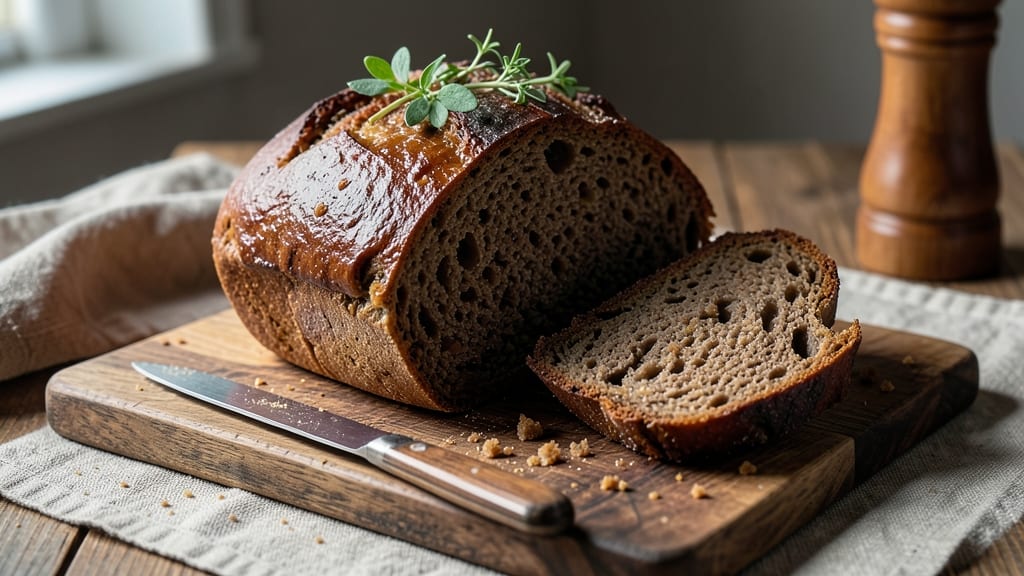
This authentic German pumpernickel bread delivers the deep, molasses-kissed flavor and dense, chewy texture that makes it a staple in German households. 🌟 The secret lies in a long fermentation process that develops complex rye flavors—something store-bought versions simply can't replicate.
I've perfected this recipe through years of baking, ensuring every slice captures that signature dark, hearty character.
The traditional method uses only rye flour, water, and a touch of molasses for subtle sweetness, creating a bread that's naturally vegan and gluten-free friendly. What sets this recipe apart is the slow baking process, which transforms the dough into a rich, moist loaf with a crisp crust.
No shortcuts here—this is the real deal, straight from German bakeries.
By the time you slice into this loaf, you'll taste the deep, earthy notes of rye balanced with just the right amount of molasses sweetness. The texture is dense yet tender, perfect for serving with butter, cheese, or even as a base for open-faced sandwiches.
This bread keeps beautifully for weeks, making it ideal for meal prep.
Ready to bake bread that tastes like a trip to Germany? The process requires patience, but the reward is a loaf that's impossible to resist. Let's get started on creating this classic German staple in your own kitchen.
Ingredients for authentic german pumpernickel bread
Six simple ingredients transform into Germany's iconic dark, chewy loaf—no shortcuts.
| Ingredient | Amount | Notes |
|---|---|---|
| Dark Rye Flour 🌾 | 4 cups | Unbleached, 100% rye preferred |
| Molasses 🍯 | ½ cup | Unsulphured for authentic flavor |
| Warm Water 💧 | 2 ½ cups | 100°F for ideal fermentation |
| Active Dry Yeast 🍞 | ½ tsp | Instant yeast works too |
| Salt 🧂 | 1 ½ tsp | Fine sea salt preferred |
| Honey 🍯 | 1 tbsp | For yeast activation (optional) |
| Apple Cider Vinegar 🍎 | 1 tbsp | Enhances molasses depth |
| Cornmeal 🌽 | ½ cup | For dusting loaf pan |
| Sesame Seeds 🌻 | 1 tbsp | Optional for crust texture |
| Coarse Sea Salt 🧂 | 1 tsp | For final crust sprinkle |
| Dark Brown Sugar 🍚 | 2 tbsp | Enhances molasses sweetness |
The rye flour is everything here. Bob's Red Mill or King Arthur make the best 100% rye flour, but any dark rye will work. If you can't find it, substitute half whole wheat and half pumpernickel flour—just know the texture won't be identical. Molasses is non-negotiable; unsulphured is best for that authentic German taste. I grab mine at Whole Foods or Trader Joe's—their unsulphured version has just the right depth. The yeast needs to be fresh, so check the date on the package. If it's been sitting in your pantry for months, toss it.
No molasses? Maple syrup at half the amount works in a pinch, but it'll taste different. Running low on apple cider vinegar? White vinegar or lemon juice will do, though the flavor won't be quite as complex. The honey is totally optional—it just helps the yeast activate faster. If you skip it, make sure your water is extra warm (100°F). For the crust, sesame seeds add texture, but you can skip them if you're not feeling it. Just don't skip the coarse sea salt on top—it's what gives that signature crunch.
This dough needs time—at least 12 hours for fermentation at room temp. Cover it with a damp towel and let it rise in a warm spot, like near your oven with the light on. Once baked, it keeps for up to 2 weeks wrapped in a towel at room temperature. For extra-long storage, freeze slices wrapped in parchment—just reheat in a 350°F oven for 5-10 minutes to revive that fresh-baked taste.
Why You'll Love This Recipe
- I’ll be real: I used to bake this and panic when leftovers remained. Not anymore. The crust stays crisp for days if wrapped tightly, and the interior stays soft enough to slather with jam or cheese. Plus, dark rye flour is cheaper than most white bread mixes, so I’m not breaking the bank for a loaf that lasts. Win-win.
- Five-Ingredient Magic: Honestly, I’m always skeptical of recipes that claim to be “authentic” but require a dozen steps. This one? Just dark rye flour, molasses, warm water, yeast, and salt. That’s it—no fancy mixers, no obscure ingredients lurking in the back of my pantry. The molasses gives it that deep, caramelized richness, and the yeast does all the heavy lifting while I sip my coffee.
- Molasses Kiss: Between us, the first time I tasted this bread, I nearly dropped my knife. That molasses isn’t just sweet—it’s complex, like a slow-simmered sauce that lingers with every bite. The dark rye adds a hearty, almost nutty depth, and the salt? Just enough to make it pop. It’s the kind of flavor that turns plain butter into a revelation.
- Breakfast to Brunch: Here’s what sold me—this bread isn’t just for sandwiches. Toast it thick for a smoky, crusty base under fried eggs, or tear it into chunks for a hearty bread pudding. My kids even sneak slices for lunch when they think I’m not looking. (Yes, even on a Tuesday night.)
Step-by-step instructions for authentic German pumpernickel bread
Here's how to bake that signature German bread with deep molasses flavor and dense texture.
👨🍳 Step 1: Activate the Yeast and Mix the Dough
In a large mixing bowl, combine the 2.5 cups warm water (about 100°F) with the 0.5 tsp active dry yeast, 1 tbsp honey, and 1 tbsp apple cider vinegar. Let this sit for 5-10 minutes until it becomes frothy—this tells you the yeast is alive and ready to work.
Once bubbly, add the 4 cups dark rye flour, 0.5 cup molasses, 2 tbsp dark brown sugar, and 1.5 tsp salt. Mix with a wooden spoon until you have a shaggy, sticky dough. The molasses will make this dough particularly wet, so don't worry if it looks more like batter than dough at first.
🥘 Step 2: Knead and Rest the Dough
Turn the dough onto a lightly floured surface and knead for 5-7 minutes until it becomes smoother and more cohesive. You're not looking for a smooth, elastic dough like with white bread—this rye dough will be dense and slightly sticky. If it's too wet to handle, add 1 tablespoon of flour at a time until it comes together.
Place the dough in a lightly oiled bowl, cover with a damp towel, and let it rest at room temperature for 1 hour. This resting period allows the gluten to relax and the flavors to meld. The dough will rise slightly but not dramatically—this is normal for pumpernickel.
🔥 Step 3: Shape and Bake the Loaf
Preheat your oven to 375°F and grease a 9x5-inch loaf pan generously with butter or oil. Sprinkle the bottom with 0.5 cup cornmeal to prevent sticking. Shape the dough into a loaf and place it seam-side down in the prepared pan. Cover with a towel and let it rise for another 30-45 minutes.
Once the dough has risen slightly in the pan, bake for 50-60 minutes until the top is dark golden brown and the internal temperature reaches 205°F. The bread should sound hollow when tapped on the bottom. If the top browns too quickly, tent with foil to prevent over-browning.
⏰ Step 4: Cool and Finish the Bread
Remove the bread from the oven and let it cool in the pan for 10 minutes. Then transfer it to a wire rack to cool completely. This cooling process is crucial—it allows the bread to set properly and develop its signature dense texture.
Once cooled, sprinkle the top with 1 tbsp sesame seeds and 1 tsp coarse sea salt for that authentic German touch. Slice with a serrated knife for clean cuts. The bread will keep well wrapped at room temperature for 3-5 days or can be frozen for up to 3 months.
Pro Tips For Making Authentic German Pumpernickel Bread
- Bloom the Yeast First: Skip the guesswork—proof your yeast in warm water with a pinch of sugar (yes, even with molasses in the mix) for 5–10 minutes until frothy. I learned this the hard way after baking a dense brick because my yeast was sluggish; now I never skip this step.
- Soak the Flour Overnight: Mix your dark rye flour with warm water, molasses, and salt, then let it sit covered for 12–24 hours. This hydrates the tough rye fibers and deepens the flavor—no need for a stand mixer to handle the dough later. (Your future self will thank you.)
- Don’t Over-Knead the Dough: Rye dough is sticky and uncooperative—work it just until it comes together, about 5 minutes by hand. Over-kneading develops gluten, making the bread dense instead of chewy. My grandmother swore by this, and she was right: less is more.
- Bake Low and Slow: Preheat your oven to 350°F (175°C) and bake for 45–55 minutes until the crust is deep brown and the internal temp hits 205°F (96°C). Cutting corners with higher heat gives you a burnt exterior and underdone center—this bread needs patience.
Storing and reheating your leftovers
Room Temp Storage
Wrap your cooled loaf tightly in a clean kitchen towel or beeswax wrap—this keeps it moist and prevents drying. Store at room temperature in a dark, cool pantry (below 70°F) for up to 2 weeks.
The molasses and rye flavors actually deepen over time, making it taste even better the next day. 🌾
Freezer Preservation
For long-term storage, slice the bread and wrap each slice individually in parchment paper, then place in a freezer bag with all air squeezed out. Label with the date—this bread stays fresh for 3 months in the freezer.
When ready to eat, thaw slices at room temperature for 1 hour before warming.
Reheating Methods
For that fresh-baked taste, reheat slices in a 350°F oven for 5-10 minutes on a wire rack. Alternatively, use a toaster oven for 2-3 minutes—this crisps the crust beautifully. If you're short on time, a microwave works (30 seconds on medium power), but it won't revive the crust.
Crust Revival Trick
If your bread loses its crispness, brush slices lightly with warm water and toast in a dry skillet over medium heat for 30 seconds per side. This restores that satisfying crunch without overcooking the interior. Perfect for serving with butter or cheese! 🧀
Avoiding Dryness
Never store pumpernickel in the refrigerator—this accelerates drying. If you must refrigerate (for short-term use), wrap tightly and transfer to room temperature for 1 hour before serving. The cold air makes rye bread stale much faster than room temperature storage. 💫
Nutrition facts
Frequently asked questions
Why does traditional pumpernickel have such a long fermentation time?
The extended fermentation (at least 12 hours) is key to developing that signature deep, molasses-rich flavor. During this time, the yeast and natural sugars in the rye flour create complex compounds that give authentic German pumpernickel its distinctive taste. This slow process also breaks down the tough rye proteins, resulting in that signature tender yet dense crumb.
Can I make this without molasses?
Yes, but the flavor will differ significantly. For a substitute, use half the amount of maple syrup or dark brown sugar (about 2 tbsp total). The molasses provides both sweetness and that unmistakable depth—traditional German recipes rely on it for authenticity. If skipping it, reduce the brown sugar slightly to balance sweetness.
What's the secret to getting that dark crust without burning?
Bake at 375°F and tent with foil after 30 minutes if the top browns too quickly. The crust develops its signature dark color from the molasses and long baking time (50-60 minutes). For extra richness, brush the crust with warm water before the final 10 minutes of baking. This creates a glossy finish while keeping the interior moist.
Is this bread gluten-free?
No, traditional German pumpernickel contains gluten from rye flour. For a gluten-free version, substitute with a 1:1 gluten-free rye flour blend (like Bob's Red Mill's). However, the texture will be less dense and may lack that signature chew. The recipe's authenticity relies on the natural gluten development during fermentation.
How do I know when the bread is fully baked?
Look for three signs: the internal temperature should reach 205°F (use a meat thermometer), the crust should be deep brown, and it should sound hollow when tapped on the bottom. If unsure, bake 5 more minutes—pumpernickel continues cooking as it cools. The bread will firm up as it rests, so don't rush this step!