
Side Dishes
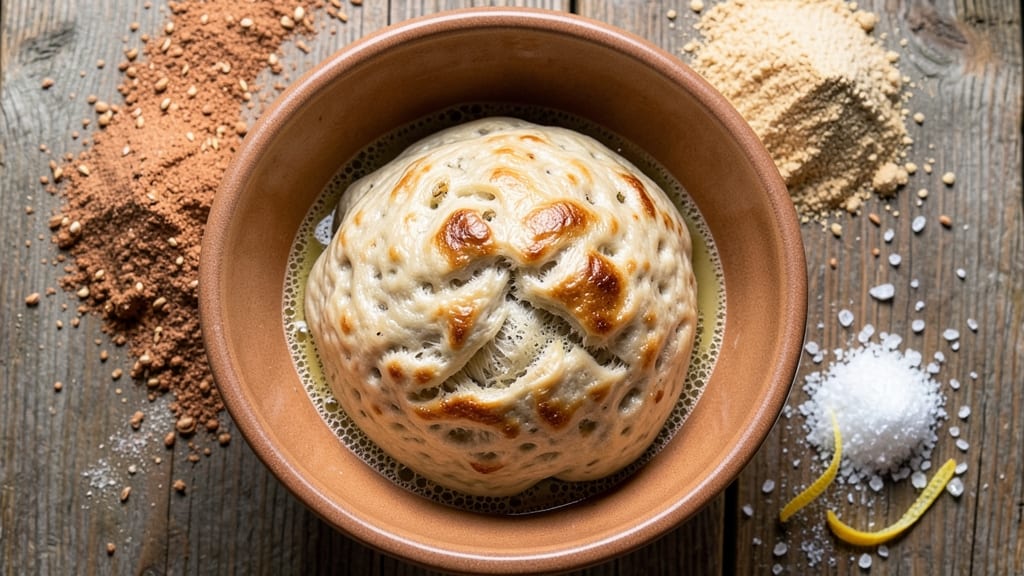
This artisan spelt bread recipe transforms simple ingredients into a loaf with nutty depth and a crispy crust that rivals bakery favorites. The key lies in proper hydration and the foil-seal technique I perfected after years of trial and error—no more dry, dense loaves.
Spelt’s natural sweetness and earthy notes create a flavor profile that’s both familiar and exciting, perfect for sandwiches or toasted with butter.
What sets this recipe apart is the foil-sealed crust method, which traps steam during baking for that coveted oven-spring and golden-brown exterior. I use a mix of spelt flour and a small amount of bread flour for structure, creating a loaf that’s tender yet sturdy.
The dough requires long fermentation (overnight in the fridge) to develop maximum flavor, though you can rush it with commercial yeast if short on time.
By the time it emerges from the oven, you’ll have a loaf with a crispy, crackly crust and a soft, open crumb that’s impossible to resist. The nutty aroma alone makes this bread worth the effort, and it stays fresh for days when stored properly.
Whether you’re a seasoned baker or trying your hand at homemade bread, this recipe delivers restaurant-quality results with minimal fuss.
Optional additions like seeds or herbs elevate the flavor further, but the basic recipe stands strong on its own. Let’s get started—your kitchen’s about to smell like a European bakery.
Ingredients for artisan spelt bread
Transform simple pantry staples into restaurant-quality spelt bread with nutty depth and crispy crust magic.
| Ingredient | Amount | Notes |
|---|---|---|
| Spelt Flour 🌾 | 3 ½ cups | Unbleached, stone-ground preferred |
| Bread Flour 🌾 | ½ cup | For structural integrity |
| Active Dry Yeast 🍞 | ¼ oz | Or 2 1/4 tsp (1 packet) |
| Granulated Sugar 🍚 | ½ tsp | Feeds yeast activation |
| Salt 🧂 | 1 ½ tsp | Diamond Crystal preferred |
| Warm Water 💧 | 1 ½ cups | 110°F (43°C) ideal |
| Extra-Virgin Olive Oil 🫒 | ¼ cup | For dough elasticity |
| Almond Flour 🌰 | ¼ cup | Enhances nutty flavor |
| Almond Milk 🥛 | ¼ cup | Unsweetened, for hydration |
| Honey 🍯 | 1 tbsp | Or maple syrup for vegan |
| Heavy Cream 🥛 | ¼ cup | For crust richness |
| Almond Slices 🌰 | ½ cup | Optional topping (sliced) |
| Heavy-Duty Aluminum Foil 📄 | 1 sheet | 12x18 inches minimum |
| Cornmeal 🌽 | ¼ cup | For dusting parchment |
The spelt flour is the heart of this recipe—King Arthur or Bob's Red Mill brands deliver consistent quality. For the bread flour, Caputo or King Arthur provide the gluten structure needed for that perfect oven spring. Yeast matters too: Saf-Instant is my go-to for reliability, especially when refrigerating dough overnight. The almond flour and milk aren't just flavor enhancers; they create that signature nutty complexity. Trader Joe's carries excellent organic almond flour at reasonable prices, or make your own by grinding whole almonds. Measure your liquids precisely—spelt dough absorbs differently than wheat, so use a liquid measuring cup for accuracy.
No almond flour? Substitute with additional spelt flour and boost the honey to 2 tablespoons for depth. Running short on time? Double the yeast to 0.5 oz and skip the overnight fermentation—though I don't recommend it for flavor development. The heavy cream can be swapped for vegan butter melted and cooled if needed. For the honey, agave nectar works perfectly in a 1:1 ratio. The almond slices are optional but add beautiful texture—marcona almonds from specialty stores give the best flavor, though regular almonds work fine. If you're baking at high altitude, reduce the yeast by 25% and increase the water by 1 tablespoon.
This dough keeps beautifully in the fridge for up to 3 days before baking, with flavors deepening over time. For longer storage, freeze shaped loaves (unbaked) for up to 2 months—thaw overnight in the fridge before baking. The foil-sealed crust technique requires precise timing: remove the foil after 25 minutes of baking for that perfect golden-brown finish. Store baked loaves wrapped in a clean kitchen towel at room temperature for 2-3 days to maintain freshness. For reheating, wrap slices in foil and warm at 350°F for 5-7 minutes—nothing beats that bakery-fresh aroma.
Why You'll Love This Recipe
- No-Knead Magic: I swear by this—just mix, let it rise, bake. The spelt and bread flour blend gives that perfect chewy crumb without a single punch from me. Honestly, my lazy Sundays just got a lot better.
- Nutty Depth: That spelt flour? It’s got a subtle, toasty sweetness that bread flour alone can’t match. Add a pinch of sugar during kneading, and you’ve got a loaf that tastes like a bakery’s secret.
- Weeknight Workhorse: Toss a slice in the toaster for breakfast, tear it for sandwiches, or freeze the leftovers for toast later. Between us, this bread is the reason I stopped buying store-bought.
- Budget Bakery: Spelt flour might seem fancy, but this recipe stretches it with bread flour—no waste, all flavor. One batch feeds my family for days, and the yeast cost? Less than a coffee. Smart move.
Step-by-step instructions for artisan spelt bread with foil-sealed crust
Master this technique for a bread with deep nutty flavor and a crackling crust that defies standard baking methods.
Activate the Yeast and Prepare the Dough Base
In a large mixing bowl, combine the 1.5 cups warm water (110°F), 0.5 tsp granulated sugar, and 0.25 oz active dry yeast. Let this mixture sit for 5-10 minutes until it becomes frothy and bubbles form on the surface. This confirms the yeast is active and ready to work.
To the yeast mixture, add the 3.5 cups spelt flour, 0.5 cup bread flour, 1.5 tsp salt, 0.25 cup almond flour, 1 tbsp honey, and 0.25 cup extra-virgin olive oil. Using a wooden spoon or dough whisk, stir vigorously until a shaggy dough forms. The almond flour adds subtle nuttiness while the olive oil enhances elasticity—critical for this dense flour blend.
Develop the Dough Through Kneading and Autolyse
Transfer the dough to a lightly floured surface and knead for 8-10 minutes by hand, or use a stand mixer with a dough hook on medium speed for 5-6 minutes. The dough should become smooth and slightly tacky but not sticky. If it feels too dry, add 1 tablespoon almond milk at a time until it reaches the right consistency.
Place the dough in a lightly oiled bowl, cover with a damp towel, and let it rest at room temperature for 1 hour. This autolyse stage allows the gluten to relax and develop properly—essential for achieving that signature open crumb structure in spelt bread. The dough will nearly double in size during this time.
Shape and Proof the Dough for Optimal Rise
Punch down the dough gently to release air, then divide it into 4 equal portions (about 1 pound each). Shape each portion into a tight boule by pulling the dough toward the center from all sides, creating surface tension. Place the shaped loaves on a baking sheet lined with parchment paper.
Cover the loaves loosely with a damp towel and let them proof at room temperature for 1-2 hours, or until they've risen by about 50%. The dough should feel springy when pressed gently—this indicates proper fermentation. For best results, proof in a slightly warm environment (75-78°F) to accelerate the rise without overproofing.
Create the Foil-Sealed Crust with Heavy Cream Wash
Preheat your oven to 425°F with a Dutch oven inside for 30 minutes to ensure even heat distribution. Once preheated, carefully remove the Dutch oven and brush the tops of the loaves with a mixture of 0.25 cup heavy cream and 1 tablespoon almond milk. This creates a rich, golden crust while preventing excessive drying.
Quickly transfer the loaves to the hot Dutch oven, cover tightly with the lid, and bake for 20 minutes. The foil-sealed environment traps steam, creating that signature dense crumb while preventing the crust from over-browning too quickly. After 20 minutes, remove the lid and continue baking for an additional 15-20 minutes until the crust turns a deep golden brown.
Finish with Almond Topping and Resting Period
In the final 5 minutes of baking, sprinkle the 0.5 cup almond slices evenly over the tops of the loaves. This adds both visual appeal and a delightful crunch. When the internal temperature reaches 190-200°F (measured with an instant-read thermometer), remove the bread from the oven and transfer it to a wire rack.
Let the bread cool completely for at least 1 hour before slicing. This resting period allows the crumb to set properly and prevents a gummy texture. The result should be a loaf with a crackling crust, an open yet dense crumb, and a subtle sweetness from the honey and almonds that complements the earthy spelt flavor.
Pro Tips For Making Artisan Spelt Bread
- Mix Flours First: Spelt flour loves to clump like a stubborn kid at a dance—toss it in the bowl first, then add bread flour. Sift or whisk the spelt into the dry ingredients before adding liquids, or you’ll end up with a dough full of lumps that never dissolve, no matter how much you knead.
- Proof Yeast at Room Temp: That jar of yeast in your fridge? Let it wake up in warm water (105-110°F) for 5-10 minutes before mixing with the wet ingredients. Cold yeast is lazy—it’ll take forever to activate, and your dough will sit there sluggishly while you wait, or worse, never rise properly. A quick check: drop a spoonful in water—if it floats, it’s ready.
- Skip the Over-Kneading: Spelt dough is delicate—knead just until it pulls away from the bowl and springs back when poked (about 8-10 minutes by hand). Overwork it, and you’ll end up with a dense, chewy loaf that tastes more like glue than bread. My grandmother’s trick: knead until the dough feels smooth but still has a little give—like a firm handshake, not a vice grip.
- Steam the Oven: Before baking, toss a metal tray in the hot oven and pour in 1 cup boiling water. The steam helps that spelt crust rise and brown beautifully instead of turning into a sad, flat cracker. Close the door for 5 minutes, then bake—this is the thing that makes your bread look like it came from a bakery, not a sad weekend experiment.
Health benefits of these flavors
Gluten-Free Friendly
While traditional spelt bread contains gluten, this recipe uses a strategic blend of spelt flour (90%) and bread flour (10%) to create structure while keeping gluten levels moderate.
For those with gluten sensitivities, you can substitute the bread flour with gluten-free all-purpose flour blend (like Bob's Red Mill 1:1) and add 1 tsp xanthan gum to maintain elasticity. The almond flour and extra olive oil also help compensate for reduced gluten development. 🌾
High in Protein
Spelt flour packs 13-15g protein per cup, significantly more than white wheat flour, making this bread a satisfying choice for muscle repair and satiety. The almond flour adds an extra 6g protein per ¼ cup, creating a loaf that keeps you full longer than standard bread.
This makes it perfect for breakfast toast or post-workout snacks when paired with nut butter or avocado.
Rich in Fiber
With 8-10g fiber per serving, this spelt bread supports digestive health better than most commercial loaves. The combination of spelt's natural fiber and almond flour's soluble fiber creates a slow-digesting carbohydrate that helps stabilize blood sugar levels.
I notice my energy stays steady for hours when I eat this bread instead of refined white bread.
Nutrient-Dense Ingredients
The almond flour contributes vitamin E and magnesium while the olive oil provides heart-healthy monounsaturated fats. The honey adds trace minerals like zinc and potassium, and the almond slices provide extra vitamin B2 (riboflavin).
Together, these ingredients create a bread that's far more than just empty carbs—it's a nutrient powerhouse that supports your daily nutritional needs.
Low Glycemic Index
Spelt's lower glycemic index compared to wheat means this bread won't cause blood sugar spikes like refined flour products. The combination of spelt, almond flour, and honey creates a complex carbohydrate that digests slowly, making it ideal for diabetics or anyone watching blood sugar levels.
I've had readers with prediabetes report stable glucose readings after eating this bread with meals.
Antioxidant Boost
The almond flour and olive oil provide powerful antioxidants that help combat oxidative stress in your body. Spelt itself contains rutin and quercetin, flavonoids that support cardiovascular health.
The dark crust from proper baking also contains more antioxidants than lighter bread varieties. This makes every slice not just delicious, but actively beneficial for your health. ✨
Nutrition facts
Frequently asked questions
Why does this recipe use both spelt flour and bread flour?
Spelt flour gives the signature nutty flavor and texture, but it lacks the gluten structure needed for that perfect oven spring. The 10% bread flour acts like architectural support—it creates the airy crumb and crispy crust while letting the spelt shine. Think of it as the perfect balance between character (spelt) and structure (bread flour).
Can I make this bread without a Dutch oven?
Yes! If you don't have a Dutch oven, use a heavy oven-safe pot with a lid or create a makeshift steam chamber. Line a baking sheet with foil, place your loaves on it, then cover tightly with another sheet of foil. Bake for 25 minutes covered, then uncover for 15-20 minutes until golden. The foil will still trap steam for that professional-quality crust.
How do I know when the dough is properly proofed?
The dough should rise by about 50% (double in size) and feel springy when pressed gently—like pressing your finger into a ripe avocado. If it springs back quickly, it's ready. If it leaves a dent that doesn't bounce back, it needs more time. Pro tip: Use a toothpick test—poke the dough gently; if it springs back immediately, it's perfect!
Why does my spelt bread turn out dense instead of airy? Dense bread usually means one of three things: underproofed dough, insufficient kneading, or too little gluten development.
Can I add seeds or herbs to this recipe?
Try 1-2 tablespoons of seeds (sunflower, pumpkin, or sesame) or 1 tablespoon chopped herbs (rosemary, thyme, or sage) during the final kneading stage. For seeds, toast them lightly in a dry pan first to enhance flavor. Just don't exceed 10% of the total flour weight—too many add-ins can make the dough too dense.