
Desserts
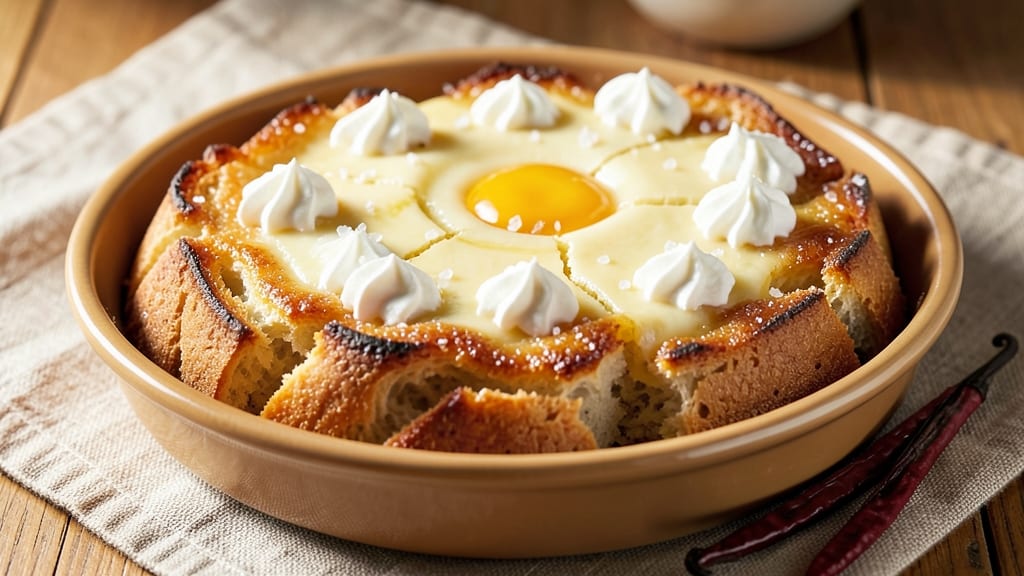
This artisan bread pudding recipe transforms stale bread into a decadent dessert with a vanilla-infused crust and caramelized swirls that taste like a bakery masterpiece.
The secret lies in soaking day-old bread in a rich custard mixture—vanilla bean, warm spices, and just the right amount of cream—before baking until golden and custardy. I’ve perfected this technique over years of testing, ensuring every slice delivers that perfect balance of crisp edges and creamy centers.
The custard consistency is everything—too thin, and it’s soggy; too thick, and it’s dry. Here, we strike the ideal texture by whisking eggs, cream, and milk to a smooth, velvety state before folding in soaked bread cubes.
A touch of cornstarch binds it all together, while a swirl of caramelized sugar adds a buttery, toasted depth that elevates this dessert from homestyle to restaurant-worthy. Baking at 325°F ensures even cooking without burning, and a 10-minute rest after baking lets the layers set for clean, elegant slices.
What sets this apart is the vanilla-infused crust—a thin layer of custard baked directly in the dish, creating a fragrant, golden shell that encases the pudding.
Topped with a dusting of powdered sugar and a drizzle of homemade caramel, it becomes a showstopper for dinner parties or cozy weeknight treats. The aroma alone—warm vanilla, toasted bread, and caramel—will have everyone gathering around the table.
For an extra touch of sophistication, toast pecans or walnuts and sprinkle them over the top, or drizzle with bourbon caramel for a boozy twist. This recipe scales beautifully, so you can easily double it for crowds. Let’s get baking—your dessert game just got an upgrade.
Ingredients for artisan bread pudding
Here’s what you’ll need to craft a bakery-style bread pudding with a vanilla crust and caramel swirls.
| Ingredient | Amount | Notes |
|---|---|---|
| Day-Old Bread 🍞 | 8 cups | Cubed, crusts removed (baguette or sourdough preferred) |
| Large Eggs 🥚 | 6 whole | Room temperature for best blending |
| Heavy Whipping Cream 🥛 | 1 ½ cups | Full-fat for rich texture |
| Whole Milk 🥛 | 1 cup | Warmed slightly for smoother custard |
| Vanilla Bean 🌿 | 1 whole | Split lengthwise for seeds (or 2 tsp pure vanilla extract) |
| Granulated Sugar 🍚 | 1 cup | Adjust to taste for sweetness |
| Cornstarch 🌾 | 2 tbsp | For silky texture and binding |
| Ground Cinnamon 🌶️ | 1 tsp | Freshly ground preferred |
| Ground Nutmeg 🌶️ | ¼ tsp | Freshly grated nutmeg is best |
| Salted Butter 🧈 | 4 tbsp | Melted for caramelized swirls |
| Light Brown Sugar 🍚 | ½ cup | Packed for caramelized depth |
| Powdered Sugar 🍚 | ¼ cup | For dusting before serving |
| Unsalted Butter 🧈 | 2 tbsp | For greasing baking dish |
The bread is your foundation—day-old loaves work best, but fresh works in a pinch if toasted first. Baguette or sourdough gives that perfect chewy texture, but any crusty bread will do. For the vanilla bean, Madagascar Bourbon from Williams Sonoma is my go-to, but any quality vanilla will work. If you’re using extract, pure Madagascar vanilla (not imitation) makes all the difference. The custard’s secret? Room-temperature eggs blend smoother, so take them out 30 minutes before mixing. Prep ahead by cubing the bread and measuring everything—this is one dessert where organization pays off.
No vanilla bean? Two teaspoons of high-quality vanilla extract works, but you’ll miss that floral depth. Swapping heavy cream? Full-fat coconut milk gives a similar richness, though the flavor shifts slightly. The brown sugar in the caramel swirls can be swapped for turbinado sugar for a crunchier texture, or muscovado for a molasses note. For the warm spices, if you’re out of nutmeg, a pinch of mace adds a similar warmth. The bread cubes should be about 1.5 inches—too big, and they’ll stay undercooked; too small, and they’ll turn to mush. Toasting the bread first? Do it lightly—just until fragrant, not browned.
This pudding tastes even better the next day, so bake it ahead—it reheats beautifully in the oven at 300°F for 15 minutes. Store leftovers covered in the fridge for up to 4 days—the flavors deepen overnight. For the caramel swirls, make them fresh—they harden as they cool, so reheat gently in the microwave before swirling. The vanilla-infused crust? Bake it separately in a small ramekin for 10 minutes at 350°F, then invert onto the pudding right before serving. That golden shell is what turns this from ‘good’ to ‘wow.’
Why You'll Love This Recipe
- No Waste, All Flavor: I swear by using day-old bread—no sad crumbs here. That starchy texture soaks up the custard like a dream, turning stale into something rich and golden. (And honestly? It’s the best way to use that half-eaten baguette from last night.)
- Creamy Vanilla Hug: The vanilla bean isn’t just an add-in; it’s the star. Split it open, scrape out those seeds, and watch the custard transform into something warmly aromatic—like dessert and breakfast had a lovechild. That first bite? Pure, buttery satisfaction.
- Weeknight Magic: This is my go-to when I’m too tired to think. Toss in the bread, pour in the eggs and cream, and bake while I fold laundry. By the time it’s done, the house smells like heaven, and I’ve got dinner covered—no takeout menus needed.
- Budget-Friendly Luxury: Eggs, milk, and bread? Check. That’s it. No fancy cheeses or imported spices—just simple, creamy perfection that tastes like a restaurant dessert. And the best part? Leftovers reheat like a dream, so one batch feeds me for days.
Step-by-step instructions for vanilla-infused bread pudding
Here's how to create a decadent bread pudding with a vanilla-kissed crust and rich caramel swirls.
Prepare the Bread and Caramel Mixture
Preheat your oven to 350°F and grease a 9x13-inch baking dish with the 2 tablespoons unsalted butter, rubbing it evenly on the bottom and sides. This prevents sticking and creates that golden, crispy edge we all love.
In a large mixing bowl, combine the 8 cups day-old bread (cubed and crusts removed) with the 0.5 cup packed light brown sugar and 1 teaspoon ground cinnamon. Toss gently until every cube is evenly coated. The sugar will start to dissolve slightly, giving you that caramelized depth right from the beginning.
In a separate saucepan, melt the 4 tablespoons salted butter over medium heat. Once melted, remove from heat and stir in the 0.5 cup packed light brown sugar until fully dissolved. This creates a luscious caramel base that will swirl through the bread pudding as it bakes. Pour this mixture evenly over the bread cubes, making sure each piece gets coated. Let it sit for 5 minutes while you prepare the custard mixture.
Blend the Custard Mixture
In a blender, combine the 6 whole large eggs, 1.5 cups heavy whipping cream, 1 cup whole milk, 1 cup granulated sugar, 2 tablespoons cornstarch, 0.25 teaspoon ground nutmeg, and the seeds from the 1 whole vanilla bean. Blend until completely smooth—no lumps allowed. This ensures a silky, velvety texture throughout the bread pudding.
I like to scrape down the sides of the blender with a spatula to make sure everything is fully incorporated. The custard should be pale yellow and have a slightly thick consistency. If it looks too thin, blend for another 10 seconds. This mixture is the heart of your bread pudding, so take your time to get it right.
Pour the custard mixture over the bread cubes in the prepared baking dish. Use a spatula to gently press down on the bread, making sure the liquid soaks in evenly. You want every cube to be moist but not soggy. This step is crucial for that perfect balance of texture—tender bread with a custardy interior.
Bake to Golden Perfection
Place the baking dish in the preheated oven and bake for 50-55 minutes. The bread pudding is done when the top is golden brown and the center is just set—it should still have a slight wobble when you gently shake the dish. You don't want it to be fully firm yet, as it will continue to set as it cools.
About 10 minutes before the bread pudding is done, broil it on high for 2-3 minutes to achieve that beautiful caramelized crust. Keep a close eye on it—broilers can vary, and you don't want to burn the top. The moment it turns a deep golden brown, remove it from the broiler and let it cool for 10 minutes before serving.
While it's cooling, dust the top with the 0.25 cup powdered sugar using a fine-mesh sieve. This adds a delicate sweetness and creates that signature dusting we all love on a great bread pudding. Serve warm with a scoop of vanilla ice cream or a dollop of whipped cream for the ultimate dessert experience.
Rest and Serve for Maximum Flavor
Let the bread pudding rest for at least 15 minutes before slicing. This allows the flavors to meld together and the texture to firm up just enough to hold its shape when you cut into it. The custard will continue to thicken slightly as it cools, so don't be alarmed if it looks a bit runny right out of the oven.
When you're ready to serve, run a sharp knife through hot water and wipe it dry before slicing. This ensures clean cuts and prevents the bread pudding from sticking to the knife. Each slice should reveal those beautiful caramel swirls and a golden, slightly crispy top. The contrast of the warm, custardy interior with the crispy edges is what makes this bread pudding truly special.
Garnish with an additional sprinkle of ground cinnamon or a few vanilla bean seeds for that final touch of elegance. Serve immediately and enjoy the rich, comforting flavors of this artisan bread pudding—it's a dessert that feels like a warm hug.
Pro Tips For Making Artisan Bread Pudding
- SOAK THE BREAD TWICE: First soak the bread in the milk-cream mixture for 10 minutes, then flip it and let it sit another 5. This guarantees even saturation—no dry pockets, no soggy bottom. I learned this the hard way when my first batch had a crusty middle that tasted like cardboard.
- USE COLD EGGS: Pull your eggs straight from the fridge and crack them into the bowl without warming them first. Cold eggs whip up fluffier and hold their shape better in the oven—no more deflating pudding. (Yes, even if you're impatient like me.)
- SCRAPE THE VANILLA BEAN: Don’t just drop in the pod—split it, scrape out every last bit of those tiny black seeds, and crush them lightly. That extra vanilla flavor makes a real difference, especially if you’re using store-bought bread with minimal flavor. (Your future self will notice.)
- BAKE UNTIL SET, THEN BROWN: Start baking at 350°F (175°C) until the center is just set—about 40 minutes—then crank the heat to 425°F (220°C) for the last 5 minutes. This gives you a golden crust without overcooking the custard inside. (Does it look weird? Yes. Does it work? Every single time.)
Storing and reheating this recipe
Fridge Storage Tips
Store your bread pudding in an airtight container for up to 4 days in the refrigerator. The flavors actually deepen overnight—this is why it tastes even better the second day!
Let it cool completely before covering to prevent condensation. I use glass Pyrex containers because they don’t absorb odors and keep the texture intact. 💫
Freezer Preservation
For longer storage, freeze individual portions in single-serving containers for up to 3 months. Wrap tightly with plastic wrap first, then place in a freezer bag to prevent freezer burn.
When reheating, transfer directly from the freezer to the oven—no thawing needed! The texture remains creamy if reheated gently at 300°F for 20-25 minutes.
Oven Reheating
My preferred method is reheating in the oven at 300°F for 15-20 minutes, covered loosely with foil. This restores the custardy texture without drying it out.
For extra crispiness, broil for 1-2 minutes at the end. A quick spray of water mist before reheating helps retain moisture if your pudding seems dry.
Microwave Method
For a quick fix, cover a single slice with a damp paper towel and microwave on 50% power for 1-1.5 minutes. Stir halfway through to redistribute heat.
Add 1 teaspoon of heavy cream if it looks dry—this revives the richness instantly. Avoid full power to prevent a rubbery texture. ✨
Caramel Swirl Revival
If the caramel swirls harden during storage, reheat them separately in the microwave for 10-15 seconds until soft. Then swirl them back into the pudding before serving. For extra decadence, drizzle with homemade caramel sauce or a sprinkle of toasted pecans to restore that bakery-fresh appeal.
Serving Warm
Always serve bread pudding warm—it’s the key to that perfect custardy texture. If stored in the fridge, let it sit at room temperature for 10 minutes before reheating. Pair with vanilla ice cream or a dollop of whipped cream to balance the richness.
The contrast of warm pudding and cold ice cream is pure comfort food magic. 🍴
Nutrition facts
Frequently asked questions
Can I use fresh bread instead of day-old?
Fresh bread works, but it won’t absorb the custard as well, leading to a soggy texture. If using fresh bread, lightly toast the cubes first to dry them out slightly. For best results, stick with day-old bread—it’s the secret to that perfect balance of tender bread and creamy custard.
How do I make this recipe vegan?
Swap the eggs for 6 tablespoons flax eggs (6 tbsp ground flaxseed + 18 tbsp water, mixed and rested for 5 minutes). Use full-fat coconut milk instead of dairy cream/milk, and add 1 teaspoon apple cider vinegar to balance flavors. The texture will be slightly denser but still delicious!
Why did my bread pudding turn out dry?
Dry pudding usually means the bread soaked up too much custard or baked too long. Next time, press the bread cubes gently but don’t over-soak them—aim for moist but not drenched. Also, check doneness at 45 minutes—it should jiggle slightly in the center. Cover with foil if browning too fast.
Can I add booze to this recipe?
Stir in 2 tablespoons bourbon, rum, or brandy with the custard mixture for depth. For a caramel twist, reduce ½ cup heavy cream with 2 tbsp brown sugar and 1 oz whiskey until syrupy, then swirl it in. The alcohol cooks off, leaving rich flavor behind.
What’s the best bread for this recipe?
Baguette or sourdough are ideal—their sturdy texture holds up to baking. Avoid soft breads like brioche (they’ll turn mushy) or overly dense varieties. For extra flavor, try challah or ciabatta. If using a very crusty bread, remove all crusts to prevent bitterness.