
Side Dishes
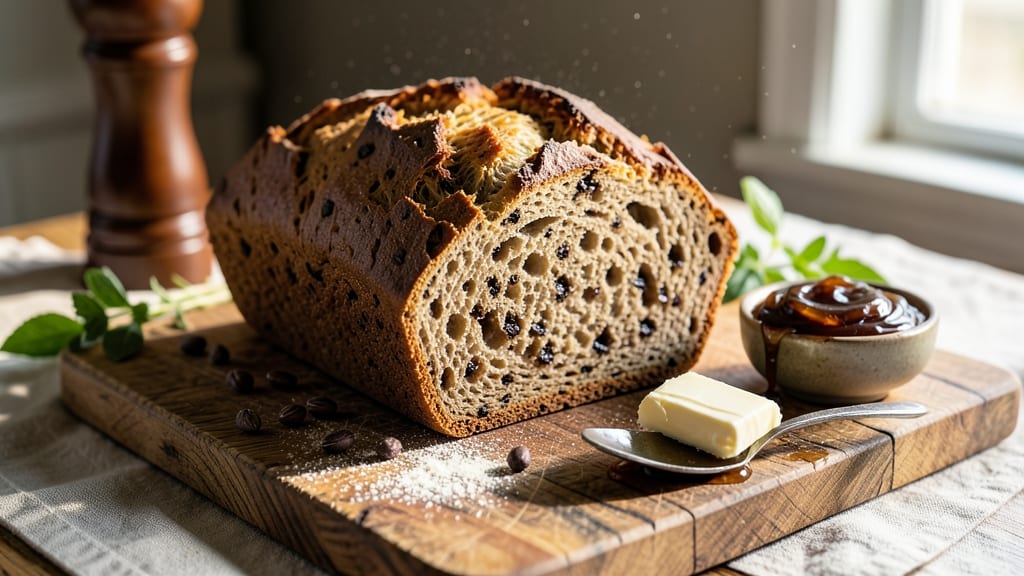
This Amish rye bread recipe delivers the perfect balance of crusty crunch and hearty seedy depth—just like the bread you'd find at a Pennsylvania farmhouse table. 🌾 The secret lies in a combination of whole rye flour, molasses, and a slow fermentation that develops rich, complex flavors over time.
Unlike store-bought versions, this recipe captures the authentic texture and depth that makes Amish rye bread so beloved. What sets this bread apart is the traditional method of mixing, kneading, and shaping by hand—no stand mixer required.
The dough gets its signature tang from a natural starter, while the seeds (carrots, flax, and sunflower) add texture and nutrition. The crust develops a satisfying crunch when baked at high heat, while the interior remains tender and moist.
By the time it emerges from the oven, you'll have a loaf with a golden-brown crust and a crumb so dense and flavorful it practically sings.
The molasses and seeds create pockets of sweetness and crunch in every bite, making it perfect for slathering with butter, pairing with soups, or serving as a hearty side dish. Amish communities have perfected this bread for generations, and now you can bring that same rustic quality to your kitchen.
Let's get started on creating a loaf that tastes like home.
Ingredients for amish rye bread
Gather these rustic ingredients for bread that tastes like Pennsylvania farmhouse tradition.
| Ingredient | Amount | Notes |
|---|---|---|
| Whole Rye Flour 🌾 | 3 cups | Light or dark rye preferred |
| All-Purpose Flour 🌾 | 1 cup | For structure and lift |
| Granulated Sugar 🍚 | ½ cup | Or light brown sugar |
| Unsalted Butter 🧈 | ½ cup | Cold, cubed for mixing |
| Molasses 🍯 | ½ cup | Unsulphured preferred |
| Active Dry Yeast 🍞 | 2 tsps | Or 1 packet instant yeast |
| Warm Water 💧 | 1 ½ cups | 110-115°F for activation |
| Natural Starter 🍞 | 1 cup | Active, bubbly starter |
| Salt 🧂 | 1 ½ tsp | Kosher or sea salt |
| Flaxseeds 🌱 | ¼ cup | Whole, for crunch and nutrition |
| Sunflower Seeds 🌻 | ¼ cup | Toasted for extra flavor |
| Carrot Seeds 🥕 | ¼ cup | Or grated carrot for texture |
| Egg 🥚 | 1 whole | For binding and richness |
| Milk 🥛 | ½ cup | Warmed for tenderness |
| Cornmeal 🌽 | ¼ cup | For dusting baking sheet |
The rye flour is non-negotiable here—Bob's Red Mill or King Arthur are my go-tos for that authentic tang. If you can't find whole rye, a blend of dark and light rye works too. The molasses? Unsulphured is key—it's what gives that deep, rich flavor. For the starter, you can make your own (just feed it daily for a week) or grab a small jar of active starter from a baking supply shop. The seeds? Toast them first—350°F for 8-10 minutes—to bring out their nutty flavors. If you're short on time, grated carrot works just as well for texture.
No flaxseeds? Extra sunflower seeds will do, or even pumpkin seeds for a different twist. Running low on molasses? Maple syrup at half the amount keeps things sweet but won't give that classic rye depth. The butter needs to be cold when you mix it in—cut it into small cubes and let it sit out for 10 minutes if it's straight from the fridge. For the yeast, if your kitchen's cold, use warm water (110-115°F) and let it sit for 5 minutes to activate. And if you're worried about the dough being too sticky, add a splash more flour—but don't go overboard or you'll lose that dense crumb.
This dough needs time to develop flavor—let it rise overnight in the fridge if you can. The seeds keep for months in your pantry, but the starter? Use it up within 2 weeks or make a fresh batch. Shape the loaf on a floured surface, then let it rest for 10 minutes before baking—this helps it hold together better. The baked loaf stays fresh for 3-4 days wrapped in a towel, but it freezes beautifully too. Just slice it before freezing for easy toast.
Why You'll Love This Recipe
- No-Knead Nightmare Over: I swear by this dough—just mix, let it rise, and bake. The whole rye flour does the heavy lifting while you scroll through memes or sip coffee. That molasses caramelizing in the oven? Pure magic with zero effort.
- Sweet-Savory Magic: The molasses and sugar team up for a deep, almost cinnamon-spiced warmth, but the rye’s earthy bite keeps it honest. Honestly, I’ve made it plain, with honey butter, or even toasted with peanut butter—it’s the kind of bread that wants to be dressed up.
- Leftovers That Last: This loaf stays fresh for days, and even better? It freezes like a dream. Toss a slice in the toaster for breakfast or pack it in lunchboxes—my kids still beg for it weeks later. (Yes, even on a Tuesday night.)
- Pantry Staple Power: You’re probably already using these ingredients—rye flour, butter, sugar. No specialty trips, no weird swaps. Between us, I’ve made this with store-brand molasses and it still came out ridiculously good. Budget-friendly doesn’t even begin to cover it.
Step-by-step instructions for Amish rye bread
Here's how to bake hearty, seed-packed rye bread with a perfect crust and tender crumb.
👨🍳 Step 1: Mix the Wet Ingredients and Activate the Yeast
In a large mixing bowl, combine the 1.5 cups warm water (around 110-115°F—it should feel like bathwater) with the 1 cup natural starter. Stir until the starter is fully dissolved and the mixture is smooth. This is your flavor foundation, so don't skip it.
Next, whisk in the 0.5 cup molasses and 0.5 cup granulated sugar until completely dissolved. Add the 2 tsps active dry yeast and let the mixture sit for 5-10 minutes until it becomes bubbly and foamy. This proves your yeast is alive and ready to work its magic. If it doesn't bubble, your yeast might be dead—start over with fresh yeast.
👨🍳 Step 2: Combine Dry Ingredients and Create the Dough
In a separate bowl, whisk together the 3 cups whole rye flour, 1 cup all-purpose flour, 1.5 tsp salt, and the 0.25 cup flaxseeds, 0.25 cup sunflower seeds, and 0.25 cup carrot seeds. This mix gives the bread its signature texture and crunch.
Make a well in the center of the dry ingredients and pour in the wet mixture. Add the 1 whole egg and 0.5 cup milk to the well. Using a wooden spoon or dough whisk, gradually incorporate the dry ingredients into the wet until a shaggy dough forms. The rye flour will make this dough stickier than traditional bread dough—don't fight it.
🍳 Step 3: Knead and Rest for Maximum Flavor
Turn the dough onto a lightly floured surface and knead for 8-10 minutes until smooth and elastic. I like to use my hands for this—it's more tactile and helps develop the gluten better than a mixer. The dough should be slightly tacky but not sticky to the touch.
Place the dough back in the bowl, cover it with a damp kitchen towel, and let it rest at room temperature for 1 hour. This first rise allows the gluten to relax and the flavors to meld. You'll notice the dough puff up slightly and develop small bubbles—this is a good sign. If it doesn't rise much, don't worry; rye bread is denser than wheat bread.
🔥 Step 4: Shape and Second Rise
After the rest, punch down the dough to release any air bubbles. Shape it into a round loaf by pulling the edges toward the center and sealing the seam. Place the loaf seam-side down in a greased 9x5-inch loaf pan and let it rise again for 1-2 hours until it's puffy and has nearly doubled in size. The dough should spring back slowly when gently pressed.
While the dough rises, preheat your oven to 375°F. Sprinkle the bottom of a baking sheet with 0.25 cup cornmeal—this creates a crispy, golden crust. Once the dough has risen, carefully transfer it to the prepared baking sheet, seam-side up.
🔥 Step 5: Bake to Golden Perfection
Bake the bread for 45-50 minutes until the top is deep golden brown and the internal temperature reaches 200°F. You'll know it's done when it sounds hollow when tapped on the bottom. The crust should be crisp and the interior should be fully baked through.
Remove the bread from the oven and let it cool in the pan for 10 minutes. Then transfer it to a wire rack to cool completely. The bread will continue to firm up as it cools, making it easier to slice. Once fully cooled, wrap it in a clean kitchen towel or plastic wrap to keep it fresh for up to 5 days.
Pro Tips For Making Amish Rye Bread
- STIR THE MOLASSES FIRST: Don’t just dump that molasses in at the end—mix it into the wet ingredients first. I learned this the hard way when my first batch had clumpy pockets of molasses that never dissolved, no matter how much I kneaded. A quick whisk with the sugar and butter ensures it blends smoothly into the batter.
- WEIGH THE RYE FLOUR: Rye flour is dense, and scooping it by volume leads to inconsistent batches. Use a kitchen scale for accuracy—especially if you’re swapping between whole rye and rye flour blends. My loaves went from dense bricks to light, airy crumb just by measuring properly.
- STOP KNEADING WHEN IT’S TOUGH: Overworking the dough makes Amish rye bread tough, not tender. Test it by pressing a finger into the dough—if it springs back slowly (not immediately), you’re good. I used to knead until my arm gave out, and the bread turned out like a hockey puck.
- USE COLD BUTTER FOR LAYERS: Cut that butter into small cubes and freeze them for 10 minutes before mixing into the dough. The cold fat melts slower during baking, creating those signature flaky layers. I was skeptical until I tried it—now I never skip this step.
Make-ahead tips for this amish rye bread
Overnight Prep
Let your dough rise overnight in the fridge for maximum flavor development. After the initial 1-hour room-temperature rise, transfer the shaped loaf to an airtight container or wrap it tightly in plastic wrap.
Place it in the fridge for 8-12 hours—this slow fermentation enhances the molasses flavor and creates a deeper, more complex taste. I often prep mine the night before and bake first thing in the morning. The cold rise also makes the dough easier to handle when shaping. 🥖
Freezer-Friendly Loaves
This bread freezes beautifully for up to 3 months without losing texture. After baking and cooling completely, wrap the loaf tightly in plastic wrap, then place it in a freezer bag with all the air squeezed out.
When ready to eat, thaw at room temperature for 2 hours or warm in a 300°F oven for 10-15 minutes to restore freshness. The crust stays crispy even after freezing—just reheat it uncovered for the best results. 🧊
Seed Toasting Shortcut
Save time by toasting your seeds in bulk and storing them in the freezer. Spread 0.25 cup flaxseeds, 0.25 cup sunflower seeds, and 0.25 cup carrot seeds on a baking sheet and toast at 350°F for 8-10 minutes, stirring halfway.
Let them cool, then store in an airtight container. Toasted seeds keep for 2 weeks in the fridge or 3 months in the freezer—perfect for quick bread prep. 🌻
Starter Maintenance
Keep your natural starter active between batches by storing it in the fridge. After using 1 cup for this recipe, feed the remaining starter with 1 cup flour and 1 cup warm water, then let it sit at room temperature for 4-6 hours until bubbly.
I keep mine in a small jar on my counter and feed it daily—it's ready to use whenever you need it. If it smells sour or doesn't bubble after feeding, discard and start fresh. 🍞
Make-Ahead Slicing
For easy serving, slice your bread before freezing or storing. Wrap the loaf in plastic wrap, then slice it with a serrated knife while still warm. Store the slices in a single layer on a baking sheet, then transfer to an airtight container.
This way, you can grab individual slices straight from the fridge or freezer—no reheating required. Perfect for quick breakfasts or sandwiches! 🍞✨
Batch Prep Tips
Double the recipe and bake two loaves at once for meal prep. Use two 9x5-inch loaf pans or bake one loaf normally and shape the second into a free-form round on a parchment-lined baking sheet.
This gives you two different serving options—one for slicing and one for rustic bread bowls. Store both in the freezer for up to 3 months and enjoy freshly baked bread anytime. 🍽️
Nutrition facts
Frequently asked questions about Amish rye bread
Can I make this bread without a natural starter?
Yes! If you don't have a starter, substitute it with 1 cup warm water and 1 packet (2¼ tsp) instant yeast. Let the yeast dissolve completely in the water for 5 minutes until foamy before mixing with other wet ingredients. The flavor won't be identical, but you'll still get a delicious loaf with a slightly less tangy profile.
Why does my Amish rye bread taste bland?
Bland flavor usually comes from skipping the long fermentation or using too much flour. Let the dough rise overnight in the fridge for maximum depth. Also, ensure you're using unsulphured molasses—sulphured versions can mute the flavor. Try adding 1 tsp extra molasses or a pinch of cinnamon for warmth.
How can I make this bread gluten-free?
For a gluten-free version, replace the flours with a 1:1 gluten-free bread flour blend (like Bob's Red Mill) and add 1 tsp xanthan gum. Reduce the all-purpose flour to ½ cup and increase the water by 2 tbsp to compensate for the different absorption. The texture will be denser but still flavorful. Always check your blend's instructions first.
What's the best way to store leftover Amish rye bread?
Wrap the cooled loaf tightly in a clean kitchen towel or beeswax wrap, then place it in a paper bag at room temperature. This keeps it fresh for 3-4 days. For longer storage, slice the bread while still warm, then freeze the slices between parchment paper. Toast directly from frozen for crispy results.
Can I substitute the seeds with something else?
Swap the seeds for ½ cup chopped walnuts, ½ cup sesame seeds, or even ½ cup dried cranberries for sweetness. Toast nuts/seeds first at 350°F for 8 minutes to enhance flavor. If you want more crunch, add 1 tbsp poppy seeds to the mix. Just maintain the total ¾ cup seed/nut amount for proper texture.