
Side Dishes
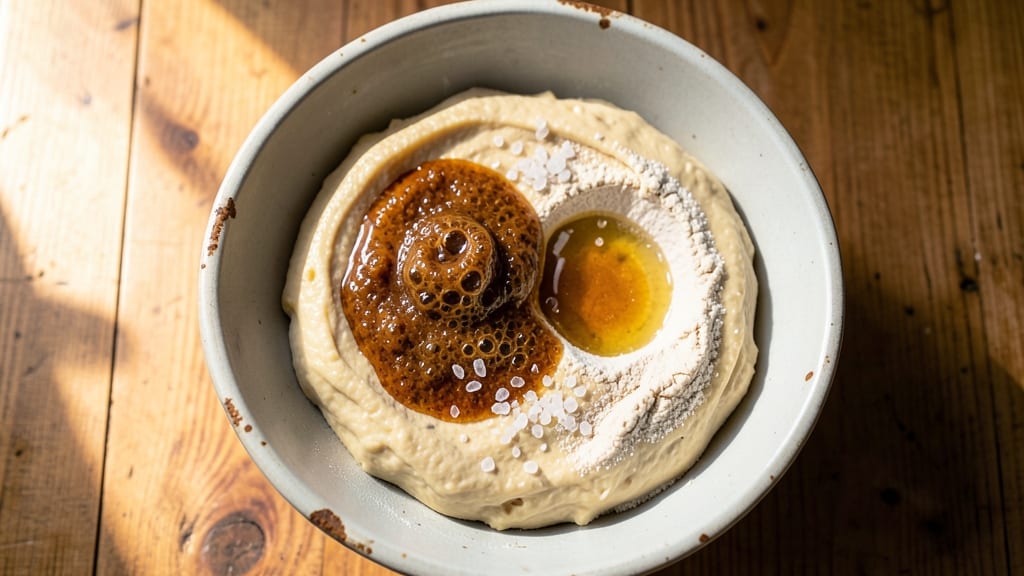
This sourdough bread recipe with added sugar transforms your loaf into a sweet, tender masterpiece with a crisp crust and moist interior. The key lies in balancing sugar’s impact on fermentation—too much slows rise, but just the right amount enhances flavor and texture.
I’ve perfected a method where sugar caramelizes beautifully while preserving that classic sourdough tang.
The process begins with a well-fed starter and a dough that incorporates sugar gradually to avoid overproofing. A foil-sealed bake ensures even heat distribution, creating a golden crust with a tender crumb inside. This technique also prevents over-browning, which sugar can cause, while still delivering that coveted caramelized sweetness.
What sets this recipe apart is how sugar enhances fermentation without sacrificing structure. The dough develops a delicate balance—just sweet enough to satisfy cravings but still hearty enough for sandwiches.
The result? A loaf with a foil-sealed tenderness that’s crisp on the outside and soft within, perfect for breakfast toast or gourmet sandwiches.
Whether you’re baking for a crowd or treating yourself, this method ensures consistent results every time. The sugar’s role is precise: it sweetens the crust, mellows the tang slightly, and creates that irresistible caramelized aroma. Ready to elevate your sourdough game? Let’s get started.
Ingredients for add sugar to sourdough bread
Precision measurements and quality ingredients create a sweetened sourdough with perfect balance.
| Ingredient | Amount | Notes |
|---|---|---|
| Active Sourdough Starter 🍞 | ½ cup | Well-fed, bubbly starter |
| All-Purpose Flour 🌾 | 3 ½ cups | Bread flour preferred for structure |
| Granulated Sugar 🍚 | ¼ cup | Fine granulation for even distribution |
| Unsalted Butter 🧈 | ¼ cup | Softened to room temperature |
| Whole Milk 🥛 | ½ cup | Warmed to 85°F for optimal hydration |
| Large Egg 🥚 | 1 whole | Room temperature for even mixing |
| Salt 🧂 | 1 ½ tsp | Diamond Crystal preferred |
| Yellow Cornmeal 🌽 | ¼ cup | For dusting banneton or parchment |
| Water 💧 | 1 ¼ cups | Filtered, room temperature |
| Aluminum Foil 📄 | 1 sheet | Heavy-duty for sealing |
The sourdough starter is the foundation—ensure it's active with bubbles and a slightly tangy aroma. King Arthur or Bob's Red Mill bread flour enhances structure, while granulated sugar should be fine-grained to dissolve evenly. For butter, Land O'Lakes or Plugrá brands work best when softened to room temperature. Warm the milk to 85°F to activate gluten properly, and use Diamond Crystal salt for accurate measurements—it's less dense than table salt. The foil sealing technique requires heavy-duty aluminum foil to prevent tearing during the bake.
Substituting bread flour? All-purpose flour plus 1 tsp vital wheat gluten mimics its structure. Brown sugar can replace granulated, but it may darken the crust more. For dairy-free options, unsweetened almond milk works in place of whole milk, though hydration may vary. Room-temperature egg is critical—cold eggs can cause uneven mixing. If you lack cornmeal, semolina flour works equally well for dusting. The sugar amount is precise: too little lacks sweetness, too much risks overproofing.
Store the starter in an airtight jar at room temperature for up to 7 days, or refrigerate for 2 weeks. Pre-mixed dough can be shaped and refrigerated overnight for improved flavor. The foil-sealed loaf reheats beautifully—wrap in a clean towel and warm in a 200°F oven for 10 minutes to restore crispness. Leftovers keep 3 days at room temperature or 1 month frozen, though texture may soften slightly.
Why You'll Love This Recipe
- Sweet Without the Fuss: I’ll be real—adding sugar to sourdough isn’t about fancy techniques. You mix the sugar right into the dough with the milk and butter, and suddenly, that tangy starter gets this warm, caramelized edge. No extra steps, just a spoonful of happiness.
- Butter-Soft Crumb: That whole milk and butter combo? It’s the secret weapon. The crumb stays soft for days, almost like brioche but with sourdough’s soul. Honestly, I’ve had loaves last a week, and they’re still begging for another slice.
- Breakfast to Dessert: This bread is my lazy morning win—toast it with jam for breakfast, or slather it with butter and honey for a dessert-like treat. (Yes, even on a Tuesday night.) The sugar balances the sour, so it’s never too heavy or too sweet.
- Pantry Magic: Between us, this is the bread that saves me money. A little sugar stretches my starter further, and the milk/butter combo costs less than buying pre-made brioche. Plus, leftovers? Perfect for French toast or croutons—no waste, all flavor.
Step-by-step instructions for sweetened sourdough bread with foil-sealed tenderness
Master the art of balancing sweetness and structure for a loaf with crispy crust and tender crumb.
Hydrate the Dough with Sugar and Fat
In a large mixing bowl, combine the 0.5 cup active sourdough starter, 1.25 cups water, 0.25 cup granulated sugar, and 1.5 tsp salt. The sugar will begin dissolving immediately, creating a slightly syrupy base that helps develop gluten while adding subtle sweetness. Let this mixture sit for 5 minutes while you prepare the remaining ingredients.
In a separate small bowl, whisk together the 0.5 cup whole milk and 0.25 cup unsalted butter until fully emulsified. The warmth of the milk (if previously heated to 85°F) helps the butter incorporate smoothly, creating a rich fat base that improves dough elasticity and final texture. Add this mixture to the starter slurry and stir until completely combined.
Develop the Dough with Proper Technique
Gradually add the 3.5 cups all-purpose flour to the wet ingredients, mixing with a wooden spoon or dough whisk until a shaggy mass forms. The sugar in this recipe requires slightly more flour than traditional sourdough—you may need to add 1-2 extra tablespoons to achieve a smooth, slightly stiff dough that cleans the sides of the bowl.
Turn the dough onto a lightly floured surface and knead for 8-10 minutes using the "stretch and fold" method. The sugar content makes this dough slightly stickier than unsweetened versions, so focus on creating surface tension rather than smoothness. When you press your finger into the dough, it should spring back slowly—a sign of proper gluten development for a tender crumb.
Bulk Ferment with Controlled Conditions
Shape the dough into a loose round and place it in a lightly oiled bowl. Cover with the 1 sheet aluminum foil and let ferment at 75°F for 4-5 hours, or until the dough has nearly doubled in size. The sugar will slightly accelerate fermentation, so monitor closely—you want visible bubbles and about 50% volume increase before shaping.
During the final hour of fermentation, perform two sets of stretch-and-folds at 30-minute intervals. This step is critical for developing strength in the gluten structure, which prevents the sugar from making the bread too crumbly. The dough should feel slightly resistant but still soft to the touch when properly developed.
Shape and Final Proof for Optimal Texture
Turn the dough onto a surface dusted with 0.25 cup yellow cornmeal and shape into a tight boule or batard. The cornmeal prevents sticking and adds subtle sweetness to the crust. Place the shaped dough seam-side up in a banneton or bowl lined with a floured towel, then cover with foil again.
Let the dough proof at 75°F for 1-2 hours, until it springs back slowly when gently pressed. The sugar helps create a slightly softer crumb, so avoid over-proofing—you want the dough to hold its shape when inverted. Preheat your oven to 450°F with a Dutch oven inside while the dough proofs.
Bake with Steam for Perfect Crust
Carefully transfer the dough to a parchment-lined baking sheet, then invert it into the preheated Dutch oven. Bake covered for 20 minutes, then remove the lid and bake for an additional 20-25 minutes until the crust reaches a deep golden brown. The sugar caramelizes beautifully during this final stage, creating that signature sweetened crust while maintaining a tender interior.
Let the bread cool on a wire rack for at least 1 hour before slicing. The internal temperature should drop to 100°F before cutting to prevent gumminess. The result will be a loaf with a crisp, slightly sweet crust and an open, tender crumb—perfect for both sweet and savory applications.
Pro Tips For Making Add Sugar To Sourdough Bread
- Whisk Sugar First: Mix the granulated sugar into the warm whole milk before adding it to the dough—this dissolves it completely, so you avoid clumpy pockets of sweetness in your final loaf. I learned this the hard way when I skipped it and ended up with a bread that tasted like sugar had been sprinkled on top rather than baked in.
- Weigh Your Flour: Use a kitchen scale for the all-purpose flour—spooning it in by volume leads to inconsistent results. Sourdough is finicky enough; don’t add guesswork to the mix. A 1% difference in hydration can throw off your rise, especially when sugar alters fermentation timing.
- Skip the Butter Rush: Fold in the softened unsalted butter last—right before shaping the dough—so it doesn’t melt into a greasy mess during bulk fermentation. Cold butter creates pockets, but if it’s too warm, you’ll end up with a dense, gummy loaf. Test by pressing a thumb into it: it should dent slightly but hold its shape.
- Proof at Room Temp: Let the dough proof in a spot that’s consistently 75–78°F (24–26°C)—no drafts, no hot spots. I used to rely on my oven’s pilot light, but the temperature swings made my sugar-infused dough rise unpredictably. A simple thermometer on the counter works better than you’d think.
Dietary considerations for add sugar to sourdough bread
Gluten-Free Adaptations
For gluten-free sourdough, replace 3.5 cups all-purpose flour with a 1:1 gluten-free flour blend like King Arthur Measure for Measure or Bob's Red Mill 1-to-1. Add 1 tbsp xanthan gum to mimic gluten's structure.
The sugar content works well with these blends, but expect a slightly denser crumb. Use 1 extra tbsp of water since gluten-free doughs absorb differently. 🌾
Low-Sugar Options
Cut the sugar to 2 tbsp (instead of 0.25 cup) for a subtly sweet loaf. Replace the remaining 0.15 cup with honey or maple syrup for depth without overpowering. This reduces fermentation time slightly, so monitor closely during bulk fermentation. The crust will still caramelize but with less intensity.
Vegan Substitutions
Replace the 1 large egg with 1 flax egg (1 tbsp ground flaxseed + 3 tbsp water) and use unsweetened almond milk instead of whole milk. The sugar content remains the same, but the dough may require 1 extra tbsp flour for cohesion.
Fermentation may slow slightly due to the absence of egg proteins, so extend bulk fermentation to 5-6 hours.
Dairy-Free Considerations
Substitute the 0.5 cup whole milk with 0.5 cup coconut milk (full-fat) for richness, or oat milk for neutral flavor. The sugar still dissolves well, but dairy-free doughs can be slightly stickier.
Increase flour by 1 tbsp if needed. Proofing time remains unchanged, but the final crumb may be marginally denser.
Diabetic-Friendly Adjustments
Reduce sugar to 1 tbsp and replace the rest with 1 tbsp erythritol or monk fruit sweetener. These alternatives caramelize similarly but have minimal impact on blood sugar.
The dough will behave like the low-sugar version, requiring close monitoring during fermentation. The crust will still develop color but with less sweetness.
Allergen-Free Notes
For nut-free kitchens, use soy milk instead of almond milk. If avoiding dairy entirely, cashew milk adds creaminess without allergens. Always check labels on gluten-free blends for cross-contamination warnings. The sugar remains unchanged, but fermentation speed may vary slightly with different milk bases.
Nutrition facts
Frequently asked questions
Why does adding sugar affect my sourdough's fermentation?
Sugar feeds the yeast and bacteria in your starter, speeding up fermentation. Too much (0.5 cup) can make the dough rise too quickly, causing weak structure. This recipe uses just 0.25 cup to balance sweetness with proper gluten development. Monitor fermentation closely—you may need 10-15% less time than unsweetened dough.
Can I substitute brown sugar for granulated?
Yes, but expect a darker crust and slightly denser crumb. Use the same 0.25 cup measurement, but note brown sugar's molasses content may require 1 extra tablespoon flour for cohesion. The caramelization will be more pronounced, giving a deeper sweetness profile.
How do I fix a dough that's too sticky from sugar?
Add flour 1 tablespoon at a time until the dough cleans the bowl. The sugar increases hydration, so focus on gluten development during the 8-10 minute stretch-and-fold kneading. If it's still too wet after adding flour, chill the dough for 30 minutes before shaping.
Will this sweetened bread still taste tangy?
The 0.5 cup active starter maintains that classic sourdough tang, while the sugar mellows it slightly. The crust's caramelization adds sweetness, but the interior remains tangy. For more tang, increase starter to 0.6 cup—just extend fermentation by 30 minutes.
Can I make this without a Dutch oven?
Yes, but use a foil-sealed baking sheet instead. Preheat the sheet for 10 minutes at 450°F, then bake covered with foil for 20 minutes before uncovering. The crust won't be as crispy, but the interior will still be tender. For extra steam, add 1 cup boiling water to a tray in the oven.