
Side Dishes
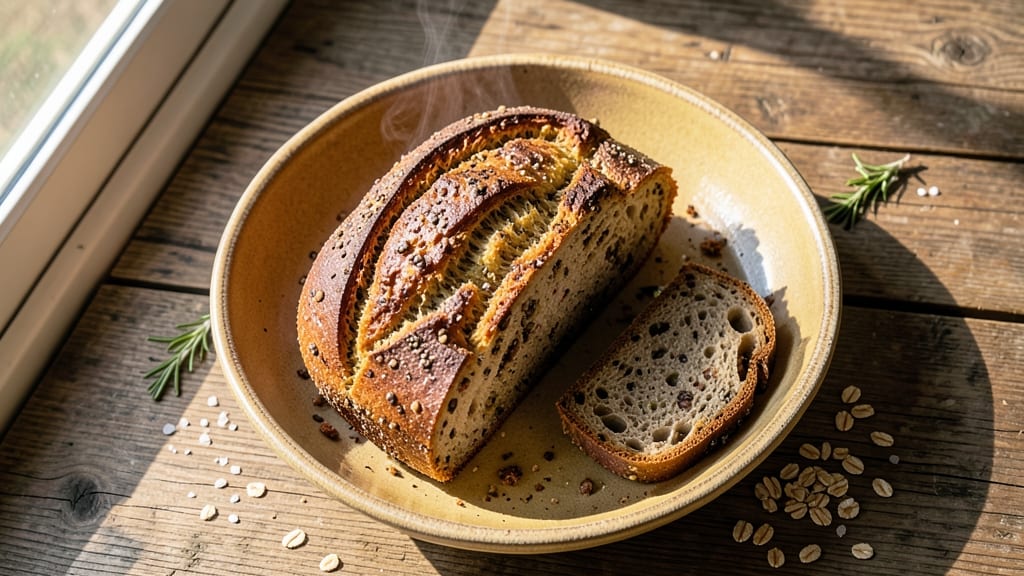
This 8 grain bread recipe delivers hearty texture and nutty depth with seeds embedded in every bite—perfect for sandwiches, toast, or serving alongside soups. The blend of whole wheat, rye, barley, and six other grains creates a robust crumb while maintaining a satisfying chew.
I developed this after years of experimenting with whole-grain loaves that often turned dense; the secret lies in proper hydration and a slow fermentation process.
The recipe combines eight distinct grains—each contributing unique flavor and nutrition—with just enough yeast and water to create a dough that rises beautifully without compromising texture. The seeds aren’t just mixed in; they’re baked right into the bread, so every slice delivers that satisfying crunch.
This isn’t your average whole-grain loaf—it’s a substantial, flavorful bread that holds up to even the heartiest meals.
Baking at 375°F for 35-40 minutes yields a crust with golden-brown depth and an interior that’s tender yet sturdy. The grains absorb moisture perfectly, ensuring no dry or gummy spots.
Whether you’re looking for a nutritious addition to your daily meals or a showstopping loaf for dinner guests, this recipe delivers restaurant-quality results with minimal effort.
For best results, let the dough ferment overnight—this enhances flavor and improves digestibility. The bread keeps well for up to five days when stored properly, making it ideal for meal prep. Ready to bake a loaf that’s as nutritious as it is delicious? Let’s get started.
Ingredients for 8 grain bread
Eight flours, three seeds, and a slow fermentation process for bread that's hearty yet tender.
| Ingredient | Amount | Notes |
|---|---|---|
| Whole Wheat Flour 🌾 | 3 cups | High-protein for structure |
| Rye Flour 🌾 | 1 ½ cups | Dark rye for depth |
| Barley Flour 🌾 | 1 cup | Pearled barley preferred |
| Spelt Flour 🌾 | ½ cup | Lightly toasted for nuttiness |
| Buckwheat Flour 🌾 | ½ cup | Actually gluten-free |
| Oat Flour 🌾 | ½ cup | Blended from rolled oats |
| Millet Flour 🌾 | ½ cup | Light and slightly sweet |
| Amaranth Flour 🌾 | ¼ cup | High-protein boost |
| Sunflower Seeds 🥜 | ½ cup | Unsalted and raw |
| Pumpkin Seeds 🥜 | ¼ cup | Toasted for extra crunch |
| Sesame Seeds 🥜 | ¼ cup | Toasted lightly |
| Active Dry Yeast 🍞 | 2 tsps | Freshly opened packet |
| Honey 🍯 | 2 tbsp | Raw for fermentation |
| Warm Water 💧 | 2 ½ cups | 105-110°F ideal |
| Sea Salt 🧂 | 1 ½ tsp | Fine grain preferred |
| Olive Oil 🫒 | 1 tbsp | Extra-virgin for richness |
The flours are the real stars here. Bob's Red Mill carries all of these in bulk, but if you're short on time, King Arthur Flour sells pre-mixed whole grain blends that work in a pinch. For the seeds, toast them separately in a dry pan for 3-4 minutes until fragrant—this brings out their natural oils and flavor. I always double-check my yeast before starting; if it's older than a few months, test it in warm water with a pinch of sugar—it should foam within 10 minutes. The honey isn't just for sweetness; it helps feed the yeast during that overnight fermentation. If you're avoiding honey, maple syrup works just as well.
No rye flour? Substitute with extra whole wheat—it'll be slightly less tangy, but you won't miss it. Running low on buckwheat? Swap for sorghum flour at a 1:1 ratio. The seeds can be adjusted too—try flaxseeds or chia for extra omega-3s. For the water, filtered is best, but tap water works if it's not overly chlorinated. If your dough feels too sticky after mixing, add 1 tbsp more flour gradually. And if you're baking at high altitude? Reduce the yeast by 25%—the air is thinner, so it'll rise faster.
This dough is sticky business, so use a stand mixer with a dough hook or go old-school with your hands. Let it ferment overnight in a lightly oiled bowl covered with a damp towel—this keeps it from drying out. The bread keeps best in a paper bag at room temperature for 3-4 days, or you can freeze slices for up to 3 months. For extra crunch, brush the warm loaf with melted butter right after baking. I make a double batch every Sunday—one for the week, one to freeze for lazy mornings.
Why You'll Love This Recipe
- No-Knead Magic: I swear by this—just mix, let it rise overnight, and bake. The rye and buckwheat do all the heavy lifting while you sleep.
- Earthy, Nutty Crunch: That blend of spelt and barley? It’s got a deep, toasty flavor that’s way more interesting than basic whole wheat. Honestly, I’ll take this over plain bread any day.
- Weeknight Wonder: Toss it in a sandwich for lunch, toast it for breakfast, or use it to soak up sauces—it’s my go-to for when I’m too tired to think. (Yes, even on a Tuesday night.)
- Budget-Friendly Staple: A single loaf lasts me a week, and the grains stretch my grocery budget further than white bread ever did. Plus, the leftovers? Still delicious after five days.
Step-by-step instructions for 8 grain bread
Here's how to transform eight distinct flours and seeds into a bread with crunchy texture and complex flavor in every bite.
Mix the Dry Ingredients Thoroughly
In a large mixing bowl, combine all the flours: the 3 cups whole wheat flour, 1.5 cups rye flour, 1 cup barley flour, 0.5 cup spelt flour, 0.5 cup buckwheat flour, 0.5 cup oat flour, 0.5 cup millet flour, and 0.25 cup amaranth flour. This blend gives the bread its signature depth and structure. Use a whisk to break up any flour clumps and ensure even distribution.
Next, add the seeds: 0.5 cup sunflower seeds, 0.25 cup pumpkin seeds, and 0.25 cup sesame seeds. The seeds will provide texture and nutrients, but they need to be evenly dispersed so every slice has that satisfying crunch. Mix everything together until the seeds are uniformly distributed throughout the flour blend.
Activate the Yeast and Combine Wet Ingredients
In a separate bowl, dissolve the 2 tsps active dry yeast in 1 cup of the warm water (around 105-110°F). The yeast should begin to foam within 5-10 minutes—this is your signal that it's active and ready to work. If it doesn't foam, your yeast might be old or the water too hot, and you'll need to start over.
In the same bowl, whisk together the remaining 1.5 cups warm water, 2 tbsp honey, 1.5 tsp sea salt, and 1 tbsp olive oil. The honey will feed the yeast during fermentation, while the olive oil adds richness and helps create a tender crumb. The salt enhances flavor and controls yeast activity.
Combine Wet and Dry Ingredients
Pour the yeast mixture into the bowl with the flour blend, then gradually add the remaining wet ingredients. Use a wooden spoon or dough whisk to stir until a shaggy dough forms. The dough will be wetter than traditional bread dough because of the high moisture content in some of the flours and seeds.
Let the dough rest for 5 minutes before kneading. This brief rest allows the flour to absorb the liquid, making the dough easier to handle. If the dough feels too sticky, you can add a small amount of additional flour (about 1-2 tablespoons), but don't overdo it—this bread relies on the moisture for its texture.
Knead and Shape the Dough
Transfer the dough to a lightly floured surface and knead for 8-10 minutes until it becomes smooth and elastic. This dough is denser than traditional bread dough, so it won't rise as dramatically, but it needs enough gluten development to hold its shape. Knead until the dough pulls away from the surface and springs back when poked.
Once the dough is ready, shape it into a loaf by rolling it into a rectangle, then folding one of the long sides toward the center. Roll it up tightly, then pinch the seam to seal. Place the loaf seam-side down in a greased 9x5-inch loaf pan or a Dutch oven if you prefer a rustic shape. Cover the pan with a damp towel and let it rise in a warm place for 1-2 hours, or until it has nearly doubled in size.
Bake for Maximum Crunch and Flavor
Preheat your oven to 375°F. Bake the loaf for 45-50 minutes, or until the top is deep golden brown and an instant-read thermometer inserted into the center reads 190-200°F. The bread should sound hollow when tapped on the bottom.
Remove the loaf from the pan and let it cool on a wire rack for at least 30 minutes before slicing. This resting period allows the bread to firm up and prevents a gummy texture. Once cooled, slice into ½-inch thick pieces to reveal the crunchy seeds locked in every bite. The crust should be crisp, and the crumb should be dense yet tender, with pockets of texture from the seeds.
Pro Tips For Making 8 Grain Bread
- Sift the Buckwheat First: Mixing buckwheat flour last prevents it from clumping into dense, gritty pockets—it’s heavier and absorbs moisture differently. I learned this the hard way when my first loaf had weird texture pockets near the crust.
- Autolyse Before Adding Water: Let the dry grains (spelt, rye, barley) sit with water for 20-30 minutes before kneading—this relaxes the gluten and makes handling the stiff dough way easier. I used to fight the dough like it owed me money; now it’s almost cooperative.
- Steam the First 10 Minutes: Buckwheat and barley flour dry out fast, so cover the loaf with a damp towel or spray the oven walls with water when baking. Without this, your crust turns hard before the center cooks—no one wants a bread that’s crunchy on the outside and gummy inside.
- Use a Scale for Flours: Measuring cups lie with these dense flours—especially rye and buckwheat. Weigh each type separately (I use a cheap $10 digital scale) to avoid a loaf that’s either too dense or underproofed. Yes, it’s extra effort, but your bread will actually rise.
Storing and reheating your 8 grain bread
Room-Temp Storage
Store your freshly baked loaf in a paper bag at room temperature for up to 3-4 days—this mimics bakery conditions and keeps the crust crisp. I place the bag on my counter (not in the fridge) because cold air makes bread stale faster.
If you must refrigerate, wrap the loaf tightly in plastic wrap and transfer to a sealed container, but expect the texture to dry out more quickly. 🌾
Freezing for Later
Slice the bread before freezing for perfect toast every time. Wrap individual slices in parchment paper, then place them in a freezer bag with all the air pressed out. Label with the date—this bread stays fresh for up to 3 months.
To reheat, pop slices in a toaster or toaster oven for 2-3 minutes until golden and crisp again. No microwave needed!
Reviving Stale Bread
If your loaf loses its crunch, don’t toss it! Preheat your oven to 350°F, wrap the bread in aluminum foil, and bake for 10-15 minutes. The steam will restore moisture without overcooking.
For extra crispiness, brush with melted butter before baking. This trick works especially well for sandwiches—just slice and toast after reheating. ✨
Seed-Specific Tips
The seeds in this bread absorb moisture differently than regular loaves. If you notice the crust drying out faster, store the bread in a loaf box with a damp paper towel on top.
For extra crunch, sprinkle a pinch of coarse salt on the crust before storing—it’ll keep the seeds from getting soggy. I also recommend storing any leftover seeds separately in an airtight container for future baking projects. 🥜
Portioning for Meal Prep
Divide the loaf into individual portions (4-6 slices) and store them in resealable plastic bags or mason jars. This makes grab-and-go toast or sandwiches effortless.
For sandwich prep, assemble with fillings (like peanut butter or hummus) and freeze on a tray before bagging—just reheat the bread separately when ready to eat. The seeds stay crunchy even after freezing! 💡
Oven vs. Toaster
For maximum crispiness, use a toaster oven set to 375°F for 3-4 minutes—it browns the crust better than a regular toaster. If you’re reheating multiple slices, space them out so they don’t steam.
For a stovetop method, heat a dry skillet over medium heat and toast slices for 1-2 minutes per side until golden. This mimics bakery-style toasting and brings back that fresh-out-of-the-oven crunch. 🔥
Nutrition facts
Frequently asked questions
Can I substitute any of the flours in this 8-grain recipe?
For example, swap buckwheat flour with sorghum flour at a 1:1 ratio, or replace rye flour with extra whole wheat flour if needed. Just remember that each grain contributes unique flavor and texture—buckwheat adds earthiness, while rye brings tangy depth. If substituting, reduce the total flour by the amount replaced to maintain moisture balance.
Why does my dough feel too sticky? How can I fix it?
The high moisture content from grains like barley and millet makes this dough naturally sticky. If it's unworkable, add 1 tablespoon flour at a time while kneading. Avoid over-flouring, though—this bread relies on hydration for its tender crumb. For extra help, wet your hands slightly when handling the dough to prevent sticking.
How do I know when the bread is fully baked?
Look for three signs: the crust should be deep golden brown, the internal temperature should reach 190-200°F (use an instant-read thermometer), and tapping the bottom should sound hollow. If unsure, bake an extra 5 minutes—underbaked grain bread can continue cooking as it cools.
Can I make this bread without a stand mixer?
Yes! This dough is manageable by hand. Knead on a lightly floured surface for 10-12 minutes, pressing and folding the dough until it becomes smooth and elastic. The seeds will make it slightly denser, so focus on even gluten development. For extra strength, use your knuckles to press down firmly during kneading.
What's the best way to store leftover seeds?
Store seeds in an airtight container in a cool, dark place for up to 3 months. Toast them lightly before storing to preserve freshness—just heat in a dry pan for 2-3 minutes until fragrant. For long-term storage, freeze seeds in small portions to maintain their crunch and nutritional value.